


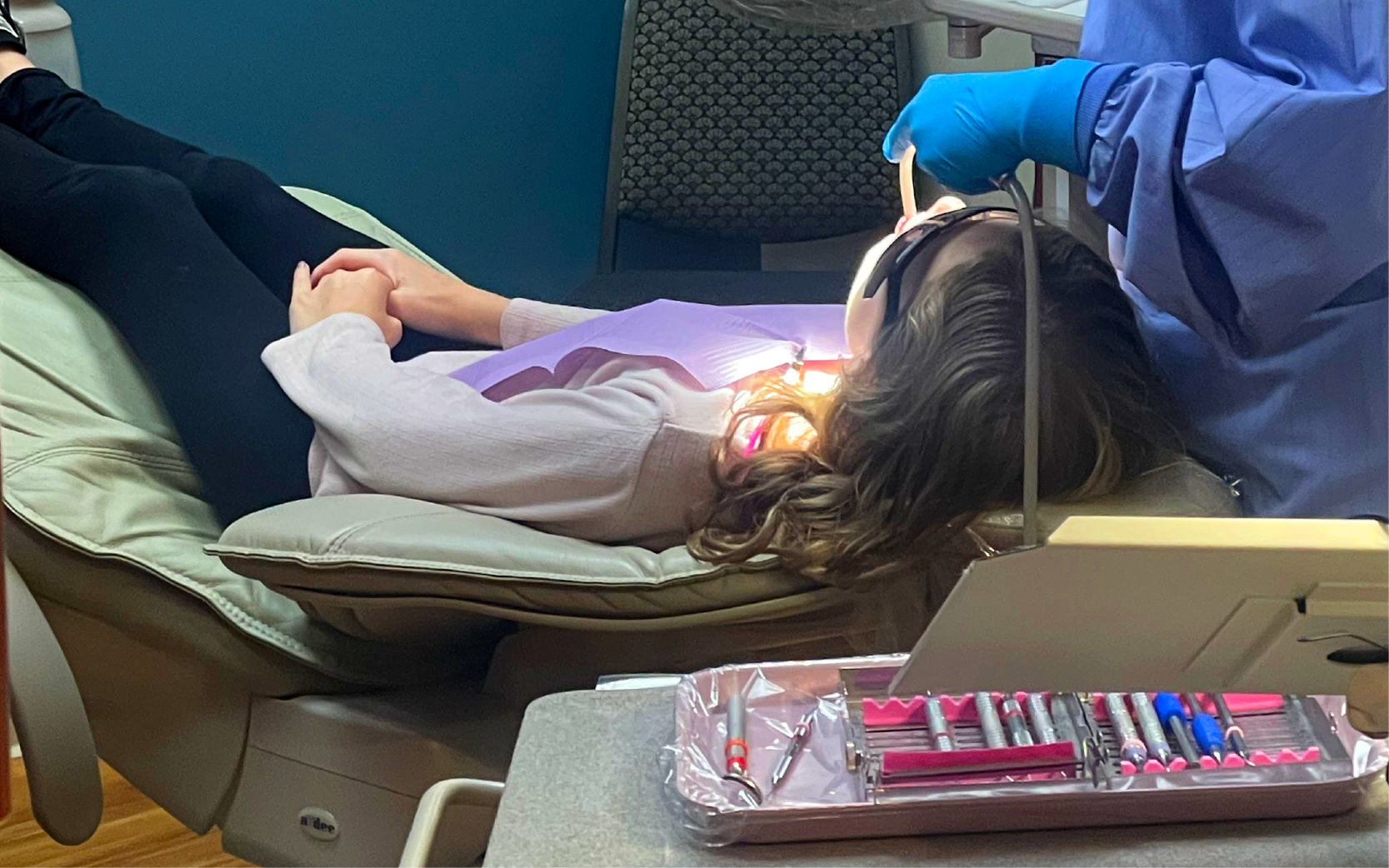
About Early Dental Care
A general discussion about teething and infants’ new teeth
Early dental care habits are essential in maintaining healthy teeth and gums
It is important for children to establish positive dental health practices early in life to ensure good oral and overall health. Parents can set the example for their children by providing good nutrition and setting up a routine in the home for brushing teeth. Parents should assist and supervise young children in brushing their teeth, and the family should keep a schedule of regular dental checkups and cleanings.
Establishing a relationship with a dentist by finding a “dental home” for your child is an important first step in giving your child a proper foundation for a healthy life, beginning in early childhood and extending through the adolescent years and into adulthood. A dental home helps to build a trusting relationship and provides the parent with a resource for guidance in establishing healthy dental habits and cavity prevention. If your child is well acquainted with the dentist and the dental staff, he or she will be more comfortable if intensive dental treatment is ever needed. With a dental home, children are more likely to receive proper preventative treatments and routine oral health care.
When Should a Child Go to the Dentist?
A general rule of thumb is that your child should visit the dentist at least by the first birthday. The American Academy of Pediatric Dentistry recommends seeing a dentist when your child’s first tooth appears. Children should have regularly scheduled checkups and cleanings at least every six months in order to prevent cavities and other dental problems. Based on your child’s specific needs, your pediatric dentist may recommend a different schedule.
Importance of Early Dental Care
Maintaining the health of your child’s primary or baby teeth is essential. Untreated cavities can affect the development of your child’s permanent teeth. Baby teeth provide space in the mouth and help guide your child’s permanent teeth into proper placement. Healthy baby teeth are essential to the proper development of muscles and jawbones, and they also aid in speech development. Generally, your child’s front teeth will start to fall out around 6 to 7 years of age. The back teeth generally remain until your child is 11 to 13 years old.
Early prevention of dental problems is essential in maintaining healthy teeth and gums. The dental staff will introduce your child to proper brushing. Your dentist will recommend a specific program of brushing, flossing and other home treatments to prevent cavities. A general rule of thumb is to brush twice a day for two minutes. The combination of home oral care routines, regular dental visits and a well-balanced diet will establish healthy habits in your child that will last a lifetime.
When Should a Child Visit the Dentist?
Most children should visit the dentist within six months of their first tooth appearing or around their first birthday. Early visits allow the dental team to monitor development, identify concerns early, and help children become familiar with the dental environment.
Routine checkups during childhood are important because dental problems in children often develop quietly without obvious symptoms in the beginning.
Regular dental visits help monitor:
- Tooth eruption and development
- Bite alignment
- Cavity risk
- Oral hygiene habits
- Gum health
- Thumb sucking or pacifier effects
- Jaw and facial development
Preventive care during childhood often helps reduce the need for more extensive treatment later.
Importance of Early Dental Care
Supporting Long-Term Oral Health and Development
Primary teeth, often called baby teeth, play a much larger role than many parents realize. Healthy baby teeth help children chew comfortably, develop speech patterns, maintain spacing for permanent teeth, and support proper jaw development.
Untreated decay in baby teeth can sometimes lead to:
- Pain and sensitivity
- Difficulty eating
- Sleep disruption
- Infections
- Premature tooth loss
- Problems with permanent tooth development
Our team focuses heavily on prevention because many childhood dental problems are easier to manage when identified early.
What Pediatric Dental Visits Include
Depending on a child’s age and dental needs, visits may include:
- Gentle dental cleanings
- Oral examinations
- Monitoring growth and development
- Fluoride treatments
- Cavity prevention guidance
- Education for parents and caregivers
- Digital imaging when appropriate
- Recommendations for home oral care
We take time to explain treatments and answer questions in a way that helps both children and parents feel more comfortable and informed.
Helping Children Feel Comfortable at the Dentist
Dental anxiety can begin early if children associate appointments with fear or discomfort. Our team focuses on creating positive experiences through patience, communication, and age-appropriate care.
Parents can help children feel more comfortable by:
- Speaking positively about dental visits
- Maintaining regular checkups
- Encouraging daily brushing habits
- Avoiding fearful language about dental treatment
- Leading by example with their own oral care habits
Children who become comfortable with preventive dental care early are often more likely to maintain regular dental visits as adults.
Why Families Choose Padden Dental
Families throughout Vancouver trust Padden Dental because we provide patient-focused care centered on comfort, education, and long-term oral health.
Parents appreciate our approach because we focus on:
- Gentle pediatric dental care
- Preventive treatment and education
- Comfortable, welcoming visits
- Honest communication
- Modern dental technology
- Personalized care for every child
- Long-term oral health guidance
We understand every child has different comfort levels and dental needs. Our team works patiently to create positive experiences while helping families make informed decisions about treatment and preventive care.
FAQs About Pediatric Care
When should my child first see a dentist?
Most children should visit the dentist by their first birthday or within six months after their first tooth appears. Early visits help monitor development and establish healthy dental habits early.
Are baby teeth really that important?
Yes. Baby teeth help with chewing, speech development, jaw growth, and maintaining proper space for permanent teeth. Untreated problems with baby teeth can affect long-term oral health.
How can I help prevent cavities in children?
Good brushing and flossing habits, regular dental checkups, fluoride exposure, healthy nutrition, and limiting sugary snacks and drinks all help reduce cavity risk in children.
Call us today to talk about how we can help with your childhood dentistry needs