


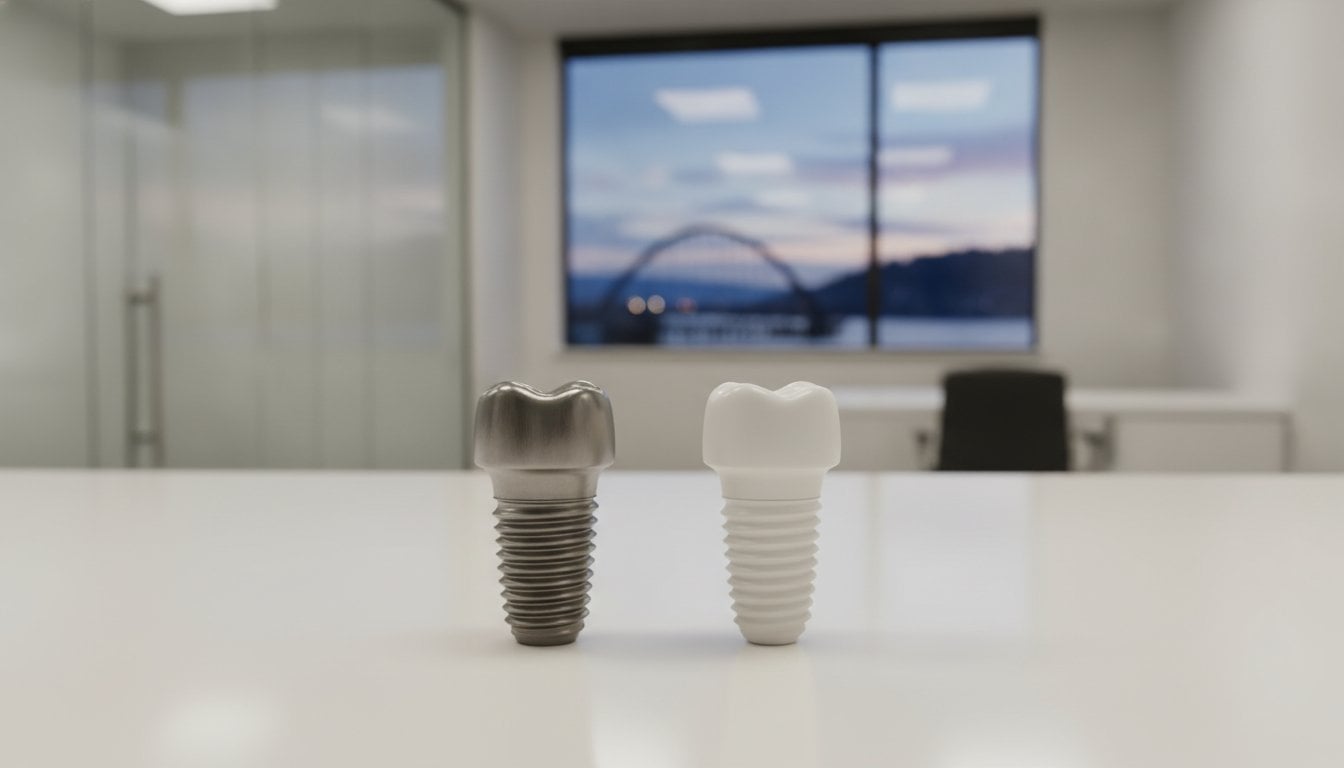
What if the choice between a metal or ceramic tooth replacement isn’t about which material is “better,” but which one actually feels like a part of you? It’s completely natural to feel a bit overwhelmed by the conflicting claims surrounding zirconia vs titanium dental implants. You want a solution that lasts a lifetime, looks indistinguishable from your natural teeth, and doesn’t cause unnecessary worry about biocompatibility or surgical discomfort. We understand that your peace of mind is just as important as the durability of your new smile.
This guide will clear the air by comparing these two leading materials across health, aesthetics, and long-term reliability. You’ll discover the key differences between zirconia and titanium dental implants so you can choose the best material for your health and your confidence. We’ll walk through the latest 2026 clinical data, which shows both materials achieving success rates between 92% and 98% over the long term. You will also learn how modern digital 3D imaging and minimally invasive techniques ensure your journey to a full smile is as gentle and precise as possible.
Key Takeaways
- Understand the differences between time-tested titanium and modern ceramic zirconia to find the material that aligns with your personal health goals.
- Learn why zirconia’s white composition is often the preferred choice for a seamless look, especially for those who worry about metal showing through the gums.
- Compare the durability and biocompatibility of zirconia vs titanium dental implants using the most recent 2026 data to ensure a lifetime of confidence.
- Discover how your unique anatomy, such as gum thickness and bone density, plays a vital role in selecting the most stable and comfortable fit.
- See how a professional consultation with Dr. Eric Dahlen can simplify your journey toward a permanent, functional, and beautiful smile.
Titanium vs. Zirconia Dental Implants: Comparing the Materials
Choosing the right material for your smile is a significant step in your health journey. When weighing the benefits of zirconia vs titanium dental implants, it helps to understand that both options are designed to become a permanent part of your anatomy. Both materials are highly biocompatible. They are crafted to encourage osseointegration, which is the natural process where your jawbone heals securely around the implant post. If you’re looking for a baseline understanding of what are dental implants, they essentially serve as sophisticated anchors that replace missing tooth roots to restore your confidence and function.
Titanium: The Industry Gold Standard
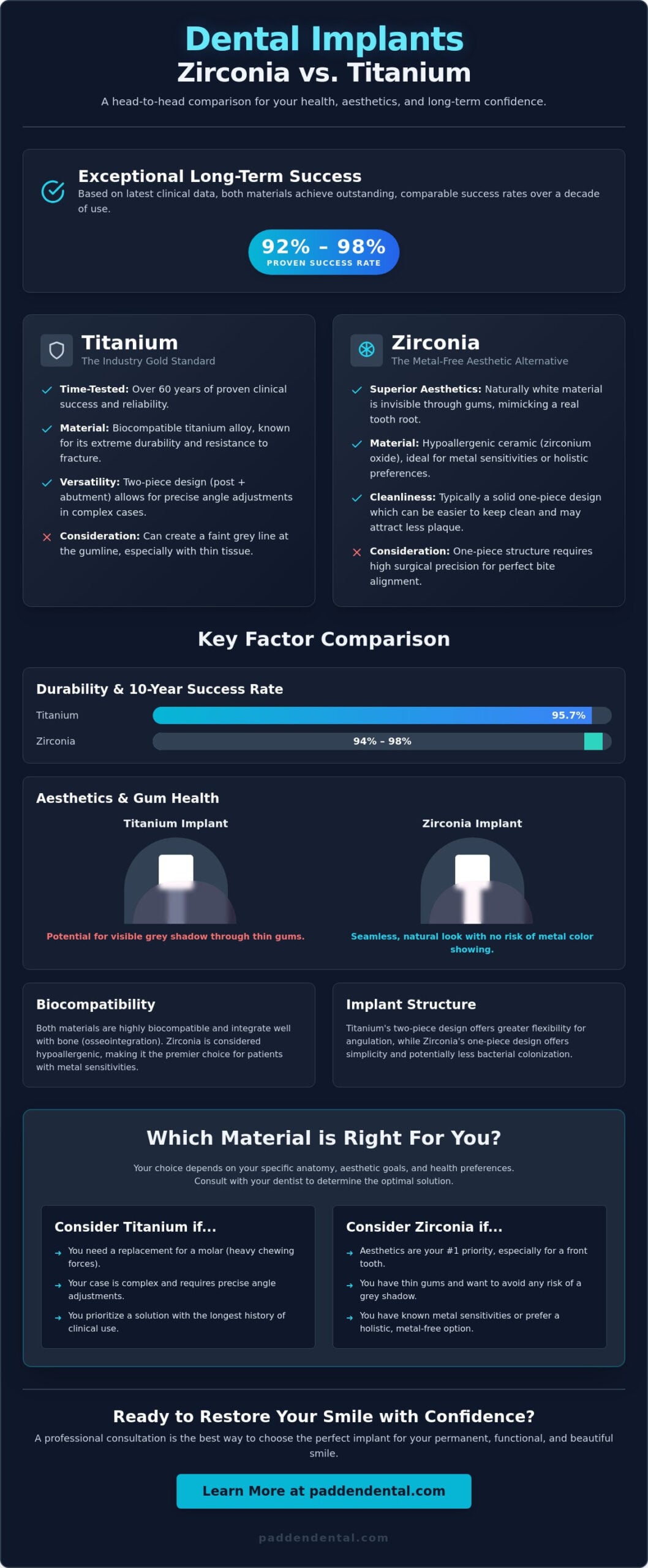
Titanium has served as the reliable foundation of restorative dentistry for over 60 years. It’s a remarkably successful choice, with clinical studies showing a 95.7% success rate over a decade of use. These implants are actually a biocompatible alloy rather than a pure metal. This composition provides the extreme durability and resistance to fracture needed to handle heavy chewing pressure in the back of the mouth.
One of titanium’s greatest strengths is its versatility. Most systems use a two-piece design, featuring a separate post and an abutment. This allows for precise adjustments to the angle of the tooth, which is especially helpful for complex cases or All-on-4 dental implants. It’s a time-tested solution that offers incredible peace of mind for those seeking a functional, long-lasting result.
Zirconia: The Metal-Free Aesthetic Alternative
Zirconia is a modern, ceramic material that has become a popular choice since its FDA approval in 2007. While it’s often marketed as a metal-free alternative, it is technically zirconium oxide, a ceramic in its crystal form. This hypoallergenic nature makes it a wonderful option for patients with rare metal sensitivities or those who prefer a holistic approach to their dental care.
Aesthetics are where zirconia truly shines. Because the material is naturally white, it’s an ideal choice for front-tooth replacements. You won’t have to worry about a dark grey line appearing near the gums, even if you have naturally thin gum tissue. Most zirconia implants are crafted as a single solid piece. This streamlined structure can be easier to keep clean, though it requires a high level of surgical precision to ensure your new tooth aligns perfectly with your bite.
Durability, Aesthetics, and Biocompatibility: Which One Wins?
Choosing between zirconia vs titanium dental implants often comes down to how each material performs in the unique environment of your mouth. While both are designed to last for decades, they interact with your bone and gum tissue in slightly different ways. Success isn’t just about the surgery itself; it’s about how your body welcomes the new addition over years of shared meals and smiles.
Long-Term Reliability and Strength
The secret to a successful tooth replacement is a process called osseointegration. Osseointegration is the structural and functional connection between living bone and the surface of a load-bearing implant. Titanium has a legendary track record in this area, with clinical studies showing a 95.7% success rate over a ten year period. Because titanium is a flexible alloy, it’s exceptionally resistant to the heavy chewing pressures found in the back of the mouth.
Zirconia is also incredibly durable, though as a ceramic, it’s naturally more brittle than metal. However, recent 2026 data indicates that zirconia success rates are now consistently between 94% and 98% after a decade. If you’re replacing a molar, the added “give” of titanium might be a benefit, whereas zirconia is often preferred for its biological harmony.
Gum Health and the ‘Dark Line’ Challenge
Our approach to restorative dentistry in Vancouver WA prioritizes both the health of your gums and the natural beauty of your smile. A common concern with titanium is the “grey line” effect. In patients with a “thin biotype,” or naturally delicate gum tissue, the dark metal of a titanium post can sometimes cast a faint shadow near the gumline.
- Aesthetic Harmony: Zirconia’s white color mimics a natural tooth root, making it invisible even through thin gums.
- Bacterial Resistance: Some research suggests zirconia attracts less plaque than titanium, which can help keep your gums pink and healthy.
- Biocompatibility: Both materials are safe, but zirconia is the top choice for those seeking a completely metal-free journey.
If you’re looking for a smile that looks completely natural even under close inspection, zirconia’s ability to blend with your anatomy is a significant advantage. If you’re ready to see which material is the best match for your smile, we’d love to sit down and discuss your goals.
Choosing the Right Implant for Your Smile in Vancouver, WA
Choosing your ideal tooth replacement is a personal decision that starts with understanding your body’s unique needs. While the debate over zirconia vs titanium dental implants often focuses on the materials themselves, the best choice depends on your specific bone density and gum thickness. We believe in providing a clear path forward so you can feel completely comfortable with your restorative journey.
The Personalized Consultation at Padden Dental
Our Vancouver clinic is more than just a medical office; it’s a welcoming space where we treat you like a neighbor. During your visit with Dr. Eric Dahlen, we use advanced 3D imaging to map out your jawbone structure with incredible precision. This technology helps us determine if the flexible strength of titanium or the aesthetic harmony of zirconia is the perfect match for your anatomy. We prioritize patient-first education, ensuring you have all the information you need to make a choice that supports your long-term health.
Anxiety-Free Implant Procedures
It’s common to feel a bit of anxiety about the surgical aspect of getting new teeth. We’ve designed our experience to be as hospitable and stress-free as possible. If the thought of surgery makes you nervous, our team offers sedation dentistry in Vancouver, WA to help you relax. Whether you choose zirconia or titanium, we handle every step of the placement with meticulous care to ensure your comfort.
Your new smile is just the beginning of your journey. As you think about your future goals, you might also consider how cosmetic dentistry in Vancouver, Washington can further enhance your look. We are here to partner with you, providing the stability and beauty you deserve for a lifetime of confident smiles.
Your Journey to a Permanent, Confident Smile Starts Here
Your path to a restored smile is a personal journey, and we’re honored to be your guide. Whether you choose the time-tested strength of titanium or the natural, metal-free beauty of zirconia, you’re investing in a future of health and confidence. The choice between zirconia vs titanium dental implants ultimately comes down to your unique anatomy and your aesthetic priorities. With success rates for both materials reaching impressive levels in 2026, you can rest easy knowing that a functional, beautiful result is within reach.
At Padden Dental, we’ve been serving our Vancouver community as a private practice since 2004. Dr. Eric Dahlen and our dedicated team specialize in making this process as comfortable as possible. We offer specialized sedation dentistry options to ensure that even our most anxious neighbors feel right at home. From your first consultation to your final restorative result, we prioritize your peace of mind and long-term well-being.
Are you ready to reclaim your smile and your health? Schedule your dental implant consultation with Padden Dental today! We look forward to helping you achieve the natural, lasting results you deserve.
Common Questions About Choosing Your Dental Implant
Are zirconia dental implants better than titanium?
Neither material is universally better; the right choice depends on your personal health goals and your unique anatomy. Titanium has been the trusted industry standard for over 60 years because of its incredible strength and versatility. Zirconia offers a modern, ceramic alternative for patients who prefer a metal-free approach or have very thin gum tissue where aesthetics are the top priority. We’ll help you weigh these factors to find your perfect match.
Do zirconia implants last as long as titanium?
Current clinical data from early 2026 shows that both materials offer exceptional longevity when placed with care. While titanium has a longer history of recorded success, zirconia implants now demonstrate ten year success rates between 94% and 98%. Both options are designed to be a permanent part of your smile. Their long-term durability relies heavily on the quality of the initial placement and your commitment to regular checkups and good oral hygiene.
Can you be allergic to titanium dental implants?
Yes, it’s possible to have a sensitivity to the metal alloys found in titanium, though it’s quite rare. For neighbors who have confirmed metal allergies or simply prefer a holistic approach, zirconia is an excellent hypoallergenic solution. Choosing a ceramic material removes the risk of a metal-related reaction entirely. This provides many of our patients with significant peace of mind as they begin their journey toward a healthier, more functional smile.
How much more do zirconia implants cost compared to titanium?
Zirconia implants typically involve a higher investment than titanium due to the specialized manufacturing process of the ceramic material. Industry data suggests that zirconia options can be 5% to 20% more expensive than their titanium counterparts. While the initial cost is slightly higher, many patients feel the aesthetic benefits and the metal-free composition are well worth the modest premium. We’ll always provide a clear explanation of your options during your consultation.
Is zirconia really metal-free?
Yes, zirconia is a ceramic material known as zirconium oxide. While zirconium is technically a metal on the periodic table, the oxidation process changes its structure into a crystal that behaves very differently in the body. This ceramic form doesn’t conduct heat or electricity like a metal does. It’s an ideal choice for patients who want a tooth replacement that is biologically neutral and won’t trigger any metal sensitivities or concerns about biocompatibility.
Which implant material is better for front teeth?
Zirconia is often the preferred choice for front teeth because its natural white color mimics a real tooth root. When comparing zirconia vs titanium dental implants for the “smile zone,” zirconia eliminates the risk of a dark grey shadow appearing near the gumline. This is especially helpful for patients with thin gum tissue. It allows for a seamless, bright result that looks completely indistinguishable from your natural teeth, even under close inspection.