



You’ve just finished your procedure with Dr. Padden, and while the clinical work is complete, the journey to your restored smile is just beginning. It’s completely normal to feel a mix of relief and a little bit of worry about the days ahead. You might be wondering how to manage discomfort or what you can safely eat without causing complications like dry socket. That’s why having a reliable set of oral surgery recovery tips is the best way to replace uncertainty with confidence. We believe that your comfort at home is just as vital as the expert care you receive in our Vancouver office.
We know you’re eager to return to your normal routine and enjoy your favorite meals again. This guide provides professional, easy to follow steps to manage pain effectively, speed up your body’s natural healing, and ensure the long term success of your dental implants or restorative work. We’ll walk you through the first 24 hours, explain how to maintain hygiene safely, and share the best foods for a gentle transition back to a regular diet. You’re not just a patient; you’re a partner in your own health, and we’re here to ensure your path to a healthy smile is as smooth and comfortable as possible.
Key Takeaways
- Learn why protecting the initial blood clot and having a companion for sedation recovery are the most important steps in the first 24 hours.
- Discover essential oral surgery recovery tips for managing inflammation and pain by timing your medication and using ice therapy effectively.
- Find out how to transition safely back to your favorite foods while avoiding habits that could disrupt your healing process.
- Identify the specific signs of dry socket or infection so you know exactly when to reach out for professional support from our Vancouver team.
- Understand how proactive home care protects your investment in dental implants and sets the stage for a successful, long-term smile makeover.
The Critical First 24 Hours: Protecting the Clot and Managing Sedation
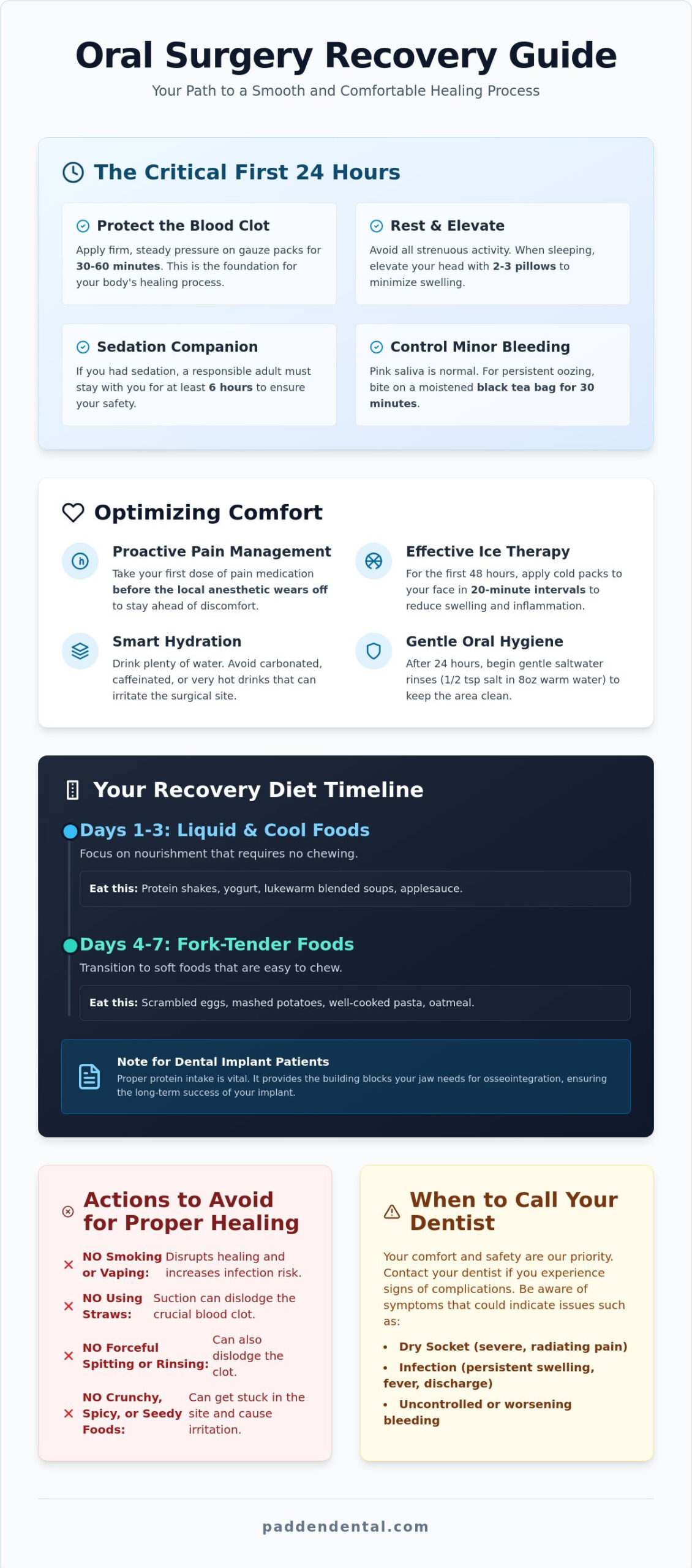
The first few hours after your procedure are the most significant for a successful outcome. As you leave our office, your primary focus should be on establishing a healthy blood clot at the surgical site. To do this, keep firm, steady pressure on the gauze packs for at least 30 to 60 minutes. This simple action provides the foundation for your body’s healing process. If you opted for sedation dentistry to ensure a comfortable experience, please remember that a responsible adult must stay with you for at least six hours. Your safety is our priority, and having someone nearby ensures you can rest deeply while the sedative effects gradually wear off.
Physical activity needs to take a backseat during this initial window. We recommend avoiding all strenuous exercise, heavy lifting, or even bending over for the first full day. An increased heart rate can lead to unwanted bleeding at the site, which can disrupt the delicate healing tissue. Following standard Post-operative instructions is essential to prevent complications. Specifically, you must avoid using straws, smoking, or spitting forcefully. These actions create suction in the mouth that can dislodge the clot, potentially leading to a painful condition known as dry socket. These oral surgery recovery tips are designed to keep your healing on track from the very first minute.
Controlling Bleeding and Oozing
It is perfectly normal to see minor oozing or blood tinged saliva for the first 24 hours. Don’t be alarmed if your saliva looks pink; it often appears more significant than it actually is when mixed with fluids. If bleeding seems to persist beyond the expected timeframe, a helpful home remedy involves biting down on a moistened black tea bag for 30 minutes. The tannic acid naturally found in black tea helps constrict blood vessels and encourages clotting more effectively than plain gauze alone.
Elevation and Rest
When you settle in for your first night of sleep, keep your head elevated above your heart using two or three pillows. Maintaining this upright position is the most effective way to minimize facial swelling because it reduces the blood pressure in your head and prevents fluid from pooling near the surgical site. By prioritizing rest and proper positioning, you’re giving your body the best environment to begin its restorative journey.
Optimizing Comfort: Pain Management and the Post-Surgery Diet
Managing your comfort doesn’t have to be a guessing game. One of the most effective oral surgery recovery tips is to take your first dose of pain medication before the local anesthetic fully wears off. This proactive approach prevents discomfort from “spiking” and helps you stay ahead of the curve. Alongside your medication, ice therapy is your best tool for the first 48 hours. Applying cold packs to the side of your face in 20-minute intervals significantly reduces inflammation and keeps facial swelling at bay.
Hydration is another essential pillar of healing, so keep plenty of water nearby throughout the day. Just be sure to avoid carbonated, caffeinated, or very hot drinks, as these can irritate the sensitive surgical area. After the first 24 hours have passed, you can begin gentle saltwater rinses using half a teaspoon of salt in eight ounces of warm water. This keeps the site clean and free of debris without the need for aggressive brushing that might disturb the healing tissue.
The Padden-Approved Recovery Diet
What you eat plays a massive role in how quickly you feel like yourself again. For the first three days, stick to cool, liquid-based options like protein shakes, yogurt, and lukewarm blended soups. As you move into days four through seven, you can transition to “fork-tender” foods such as scrambled eggs, mashed potatoes, or well-cooked pasta. It’s helpful to review a professional guide on the best diet after oral surgery to ensure you’re getting the nutrients you need without risking injury. Always avoid crunchy, spicy, or seedy foods like popcorn or strawberries, which can easily become trapped in the extraction site.
Long-Term Restorative Success
If your journey involves dental implants, your diet is even more critical for a successful outcome. Proper protein intake provides the building blocks your jawbone needs for osseointegration, which is the process where the bone fuses with your new implant. This nutritional support ensures your restorative work remains stable and healthy for years to come. If you have questions about your specific healing timeline, our team at Padden Dental is always ready to provide the personalized guidance you deserve.
Monitoring Your Progress: When to Call Your Vancouver Dentist
As you move through the first week of healing, it’s natural to wonder if everything is progressing as it should. While minor discomfort is expected, knowing the signs of common complications can provide immense peace of mind. One specific issue to watch for is dry socket. This often presents as a dull, throbbing ache that begins three to five days after your procedure and radiates toward the ear. If you notice a persistent fever over 101°F or a foul taste that doesn’t go away with gentle rinsing, these could be signs of a developing infection. We want you to feel supported throughout this entire process, which is why our local team is always available for emergency dental care if you ever feel that something isn’t quite right.
It’s also helpful to keep an eye on the swelling timeline. Swelling typically reaches its peak on day three before it gradually begins to subside. If you notice an increase in swelling or redness after day four, it may indicate a complication that needs our attention. Most of our patients find they can return to their normal work or school routine within two to three days. However, following these oral surgery recovery tips means listening to your body; you should still avoid heavy exercise or lifting for at least a full week to keep your blood pressure stable and prevent site irritation.
Resuming Your Regular Routine
Once the initial tenderness subsides, you can gradually reintroduce brushing the surgical area with a soft bristled toothbrush. Move slowly and use a gentle touch to avoid disturbing the delicate new tissue. While you may feel ready to jump back into your fitness routine, waiting the full seven days for heavy cardio or weightlifting ensures your heart rate doesn’t cause unnecessary throbbing at the extraction site.
The Importance of Follow-Up Care
Dr. Padden will want to see you for a quick check-up to ensure the tissue is healing perfectly, which is especially vital for our dental implant patients. This visit allows us to confirm that your recovery is staying on schedule and that your restorative journey is a success. A simple 10 minute follow-up can prevent months of restorative setbacks and keep your smile transformation moving forward exactly as planned.
Your Path to a Confident, Healthy Smile
Following the right steps after your procedure is the best way to ensure your mouth heals quickly and correctly. We’ve explored how prioritizing rest in the first 24 hours and maintaining a gentle, soft food diet can make a significant difference in your daily comfort. By applying these oral surgery recovery tips, you are protecting your personal health and ensuring the long term success of your restorative treatment. Dr. Eric Dahlen has been serving the Vancouver community since 2004, and our team is dedicated to providing meticulous care for complex dental implant restorations.
Providing clear expectations is part of our commitment to your care; much like how a specialized guide for augmentation mammaire Montréal helps patients navigate their aesthetic journey, we ensure you have every tool necessary for a healthy post-operative experience.
To further support this commitment, many dental professionals utilize PractCom to provide patients with a comprehensive library of digital post-treatment instructions, ensuring that every step of the recovery process is clearly understood and easily accessible at home.
Whether you’re just starting your journey or looking for a partner in your long term oral health, we are here to help. We offer compassionate sedation dentistry options to make every visit as relaxing and stress free as possible. Your well being is our ultimate goal, and we feel proud to support our neighbors in achieving their best smiles. If you’re ready to learn more about how we can help you reclaim your dental health, we invite you to Schedule a Consultation with Dr. Padden today. We can’t wait to see you back at your best.
Frequently Asked Questions
How long does it take to recover from oral surgery?
Most patients feel significantly better within 7 to 10 days, though the initial healing phase typically happens in the first 48 to 72 hours. While you’ll likely return to work or school in just 2 or 3 days, the underlying bone and tissue continue to mature for several months. We monitor this progress during your follow-up visit at our Vancouver clinic to ensure your journey to a healthy smile is staying on track.
What can I eat after oral surgery?
You should stick to a soft food diet for at least the first week, starting with cool liquids like protein shakes and smoothies on day one. As you progress, you can enjoy lukewarm soups, mashed potatoes, scrambled eggs, and yogurt. Avoiding crunchy or sharp foods like chips and nuts is vital because they can irritate the surgical site and interfere with your oral surgery recovery tips and timeline.
How do I know if I have a dry socket?
A dry socket is typically identified by a sharp, throbbing pain that starts 3 to 5 days after surgery and isn’t relieved by your standard medication. You might also notice a visible opening where the clot should be or experience an unpleasant taste in your mouth. If you feel pain radiating toward your ear or jaw, please contact our office immediately so we can provide the necessary relief and care.
Can I brush my teeth after oral surgery?
Yes, you can brush your other teeth, but you must avoid the surgical site entirely for the first 24 hours. After the first day, you can gently brush the area with a very soft bristled toothbrush and use warm saltwater rinses to keep the site clean. It’s important not to spit forcefully; instead, let the water fall out of your mouth into the sink to protect the delicate healing tissue.
Is it normal to have bruising on my face after surgery?
It is completely normal to experience some bruising and skin discoloration after more complex procedures like dental implant placement. This typically peaks 2 or 3 days after surgery and may turn yellow or green as it fades over the following week. Using ice packs as directed during the first 48 hours is the most effective way to minimize this response and ensure your healing process remains as comfortable as possible.
When can I stop using gauze after my tooth extraction?
You can typically stop using gauze once the active bleeding has slowed to a very minor ooze, which usually happens within 3 to 6 hours. If the gauze is only slightly pink or damp when you remove it, you don’t need to replace it with a fresh pack. Keeping your head elevated and resting quietly will help the bleeding stop faster so you can begin the next phase of your recovery with ease.