



Did you know that over 3 million dental implants are placed every year in the United States alone? This high number reflects a growing trust in a procedure that boasts a clinical success rate of over 97 percent. Even so, it’s completely natural to feel a mix of excitement and nerves when you think about the dental implant recovery process. You might find yourself worrying about post-operative discomfort, wondering when you can finally enjoy a solid meal again, or feeling anxious about the long-term success of the surgery.
We believe that your journey to a restored smile should be defined by comfort and clarity rather than mystery. In this guide, you’ll discover exactly what to expect during each stage of your healing, from those first critical 24 hours to the day you reveal your final, permanent smile. We’ll walk you through a clear, anxiety-reducing timeline and share practical tips for a gentle recovery, giving you the confidence to move forward with your dental health goals. By understanding the path ahead, you can focus on the positive outcome: a healthy, functional, and beautiful smile that lasts a lifetime.
Key Takeaways
- Prioritize absolute rest during the first 24 hours to help blood clots stabilize and set the stage for a smooth healing journey.
- Gain a clear understanding of the dental implant recovery process, including how your jawbone naturally fuses with the new titanium post.
- Learn why “invisible healing” is so important, as your body works hard behind the scenes even after you start feeling back to normal.
- Identify the essential steps for moving from your initial surgery to the exciting final reveal of your permanent, custom-crafted dental crown.
- Discover how routine professional monitoring at our clinic protects your investment and ensures your bone density remains healthy for years.
Caring for Your New Smile: The First 72 Hours of Dental Implant Recovery
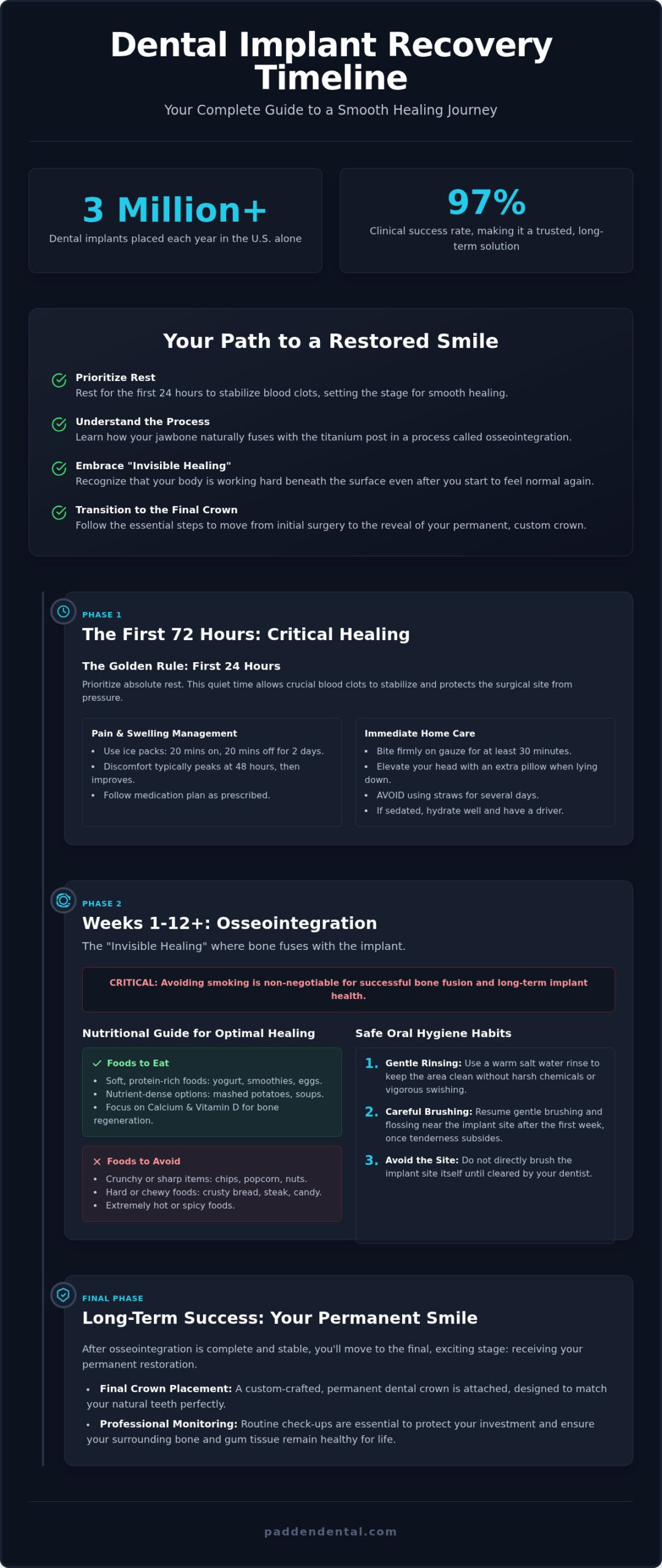
The first three days after your surgery are the most important part of your journey toward a healthy, complete smile. During this time, we ask you to follow the “Golden Rule”: prioritize absolute rest for the first 24 hours. This quiet time allows blood clots to stabilize and protects the surgical site from unnecessary pressure. While you might experience some minor swelling, bruising, or tenderness, these are simply signs that your body is beginning its natural healing work.
To keep your recovery on track and comfortable, please follow these simple steps during the initial hours at home. Bite firmly on the gauze pads for at least 30 minutes to help the site settle. Avoid using straws for at least a few days, as the suction can disturb the healing area. When you lie down, keep your head elevated with an extra pillow to reduce pressure. Understanding the dental implant recovery process helps you stay calm while your body begins its cycle. These first 72 hours are vital for preventing issues like dry socket or minor infections, ensuring your new implant has the best possible start.
Recovering from Sedation Dentistry
If you chose sedation dentistry in Vancouver WA, you’ll likely wake up feeling relaxed and pleasantly groggy. It is a wonderful way to experience anxiety-free care, but you must have a designated driver to take you home and stay with you for a few hours. Focus on staying well-hydrated with plenty of water as the sedative wears off. Because sedation keeps your body calm during the procedure, it can actually help lower initial inflammation by reducing the physiological stress on your system.
Pain Management and Swelling Reduction
The Osseointegration Phase: Navigating the Weeks of Bone Healing
Once the initial swelling from your procedure fades, you enter the most remarkable stage of the dental implant recovery process: osseointegration. This is the biological wonder where your jawbone actually fuses with the titanium post, creating a foundation as strong as a natural tooth root. While you might feel completely normal after just a few weeks, this “invisible healing” is still very much in progress beneath the surface. It is vital to maintain healthy blood flow and oxygen levels during this time, which is why avoiding smoking is absolutely non-negotiable for long-term success. Our team at restorative dentistry in Vancouver WA carefully monitors this stability to ensure your bone is ready before we ever place your final crown. Before you begin your journey, it’s helpful to review what to know about dental implants to understand how this long-term integration protects your jaw health.
Nutritional Guide: What to Eat (and Avoid) for Optimal Healing
Eating well supports your body’s ability to knit bone and tissue together efficiently. Start with clear liquids and slowly move toward a “no-chew” diet that keeps pressure off the surgical site while providing the fuel you need. Focus on these key nutrients:
- Protein: Essential for tissue repair and immune function.
- Calcium and Vitamin D: The primary building blocks for strong bone regeneration.
- Soft Favorites: Greek yogurt, protein-packed smoothies, and creamy mashed potatoes are excellent choices.
You must strictly avoid sharp or crunchy items like tortilla chips, popcorn, or crusty bread until your specialist gives you the all-clear.
If you’re looking for inspiration on how professional chefs prepare high-quality soft foods, you might discover Island Catering Equipment Co. and their range of commercial kitchen solutions that help maintain food integrity and texture.
Safe Oral Hygiene Habits During Recovery
Keeping your mouth clean is a simple way to prevent bacteria from interfering with your progress. A warm salt water rinse is a gentle, neighborly remedy that keeps the area fresh without the need for vigorous swishing or harsh chemicals. You can typically resume gentle brushing and flossing near the implant site once the initial tenderness subsides, which often happens after the first week. If you ever have questions about your specific progress during the dental implant recovery process, we invite you to connect with our supportive team for personalized guidance.
Long-Term Success: Transitioning to Your Permanent Restoration
The final step of your journey is perhaps the most rewarding moment of all. Once the bone has fully integrated with your implant, we attach the abutment and your custom-crafted dental crown. This is the “unveiling” that turns a surgical success into a functional, beautiful smile. While the technical side of this is detailed in any clinical overview of dental implants, for you, it simply means reclaiming the ability to eat, speak, and laugh without a second thought. Unlike temporary solutions like bridges or dentures that may need replacement every few years, an implant offers a lifetime of value by preserving your natural jawbone and facial structure.
As you near the end of the dental implant recovery process, you’ll begin transitioning back to a full, unrestricted diet. It’s an exciting time to test your new tooth with confidence. To ensure this success remains permanent, regular check-ups at our Vancouver clinic are vital. These visits allow us to monitor your bone density and the health of the surrounding tissue, ensuring your investment stays as strong as the day it was placed. We take great pride in seeing our neighbors return to their favorite local restaurants with a fully restored smile.
Signs of Healthy Progress vs. When to Call Your Dentist
Knowing what is normal helps keep your mind at ease. Healthy milestones include gum tissue that looks firm and pink, along with a total absence of sensitivity. However, we want you to stay vigilant for a few specific red flags. If you experience a persistent fever, throbbing pain that continues after the fifth day, or any sensation of “looseness” in the implant, please contact us. Padden Dental is always available for emergency dentist concerns to ensure your healing stays on the right track.
Maintenance for a Lifetime Smile
Caring for your new implant is remarkably simple because you treat it just like a natural tooth. Daily brushing and flossing are essential to keep the surrounding gums healthy. If you have a history of grinding your teeth, we might recommend a custom nightguard to protect your restoration from unnecessary wear. Since 2004, our team has been dedicated to the long-term restorative health of the Vancouver community. We’re here to support you every step of the way, even long after the initial dental implant recovery process is complete.
Your Path to a Confident and Functional Smile
Navigating the dental implant recovery process is a rewarding path that moves from careful rest in those first 72 hours to the exciting moment of your final restoration. You’ve seen how a successful outcome depends on both your diligent home care and the precision of your dental team. From the initial healing phase to the remarkable process of osseointegration, every step brings you closer to the freedom of a full, healthy smile. We take great pride in making this transition as smooth and predictable as possible for every neighbor who walks through our doors.
Dr. Eric Padden has been serving our Vancouver community since 2004, specializing in All-on-4 and complex restorative cases with a compassionate touch. We believe that high-quality care should never be stressful. This is why we offer advanced sedation options to ensure your experience is relaxed from start to finish. When you’re ready to reclaim your dental health and confidence, we’re here to partner with you. Schedule Your Dental Implant Consultation at Padden Dental Today and take the first step toward a lifetime of smiles. We look forward to welcoming you to our dental family and supporting your journey toward lasting wellness.
Common Questions About the Dental Implant Recovery Process
How much pain should I expect during the dental implant recovery process?
Most patients find that discomfort is quite manageable and typically peaks around 48 hours after the procedure. You’ll likely experience a sensation similar to a mild toothache or minor soreness in the gums. We provide clear instructions on using over-the-counter or prescribed relief to ensure you stay comfortable. Because we prioritize your well-being, we also offer sedation options to make the initial surgical experience itself completely stress-free.
What are the best foods to eat immediately after dental implant surgery?
Stick to clear liquids and very soft, “no-chew” foods for the first few days to protect the surgical site. Nutritious options like Greek yogurt, protein-rich smoothies, lukewarm soups, and mashed potatoes are excellent choices. Avoid anything hot, spicy, or crunchy, as these can irritate the healing tissue. This careful approach to nutrition is a vital part of a smooth dental implant recovery process and helps your body heal more efficiently.
How long do I have to wait before I get my permanent tooth?
The wait for your permanent crown usually lasts between three and six months. This time is necessary for osseointegration, which is the biological process where your jawbone securely fuses with the titanium implant. We monitor your progress closely during this period to ensure the foundation is strong and stable. Once your bone has fully integrated, we’ll place your custom-crafted crown to complete your beautiful, permanent smile.
Can I go back to work the day after my dental implant procedure?
Many patients feel well enough to return to work within 24 to 48 hours after their procedure. If your job involves heavy physical labor, we recommend taking a few extra days off to avoid increasing your heart rate, which can lead to swelling or bleeding. If you chose sedation for your surgery, you’ll definitely need the first 24 hours to rest while the effects of the sedative fully wear off.
Will I be without a tooth during the months of healing?
You won’t have to go without a tooth while your implant heals. We can provide a temporary restoration, such as a bridge or a removable flipper, to ensure your smile looks natural and complete during the osseointegration phase. This allows you to feel confident in social situations while your jawbone does the important work of securing the implant post. We’ll discuss the best temporary option for your specific case during your consultation.
How do I know if my dental implant is failing or just healing slowly?
Healthy healing involves a gradual decrease in sensitivity and the firming of pink gum tissue. If you notice persistent, throbbing pain after the first week, a feeling of looseness in the implant, or significant swelling that doesn’t improve, these could be red flags. While the dental implant recovery process has a high success rate, it’s important to contact us immediately if you experience these symptoms so we can ensure your restoration stays on track.