



Most people imagine a dental implant procedure as a series of sharp pains and scary drills, but the reality is much closer to a routine filling than a major surgery. It’s natural to feel a knot in your stomach when thinking about needles or oral surgery. You are likely wondering exactly what does getting a dental implant feel like from the moment you sit in the chair to the first time you bite into an apple with your new tooth. Our goal is to replace that uncertainty with peace of mind. In this guide, you’ll discover how Dr. Eric Dahlen uses modern sedation dentistry to keep you comfortable during the process. We will walk through the healing phase and explain why your permanent smile will eventually feel just as natural as your original teeth. Your journey to a healthy smile should be one of excitement rather than fear.
Key Takeaways
- Understand the sensory transitions of the placement process, including how sedation dentistry ensures you feel only gentle pressure when discovering what does getting a dental implant feel like.
- Learn what to expect during the initial healing phase, from the mild tingle of returning sensation to the manageable tightness of a settling restoration.
- Discover why titanium implants eventually feel indistinguishable from natural tooth roots, providing a stable and permanent solution without the sensitivity of natural teeth.
- Gain the confidence to move forward with your smile restoration by learning how Dr. Eric Dahlen prioritizes your comfort through every sensory stage of the journey.
The Day of the Procedure: Sensory Expectations and Comfort
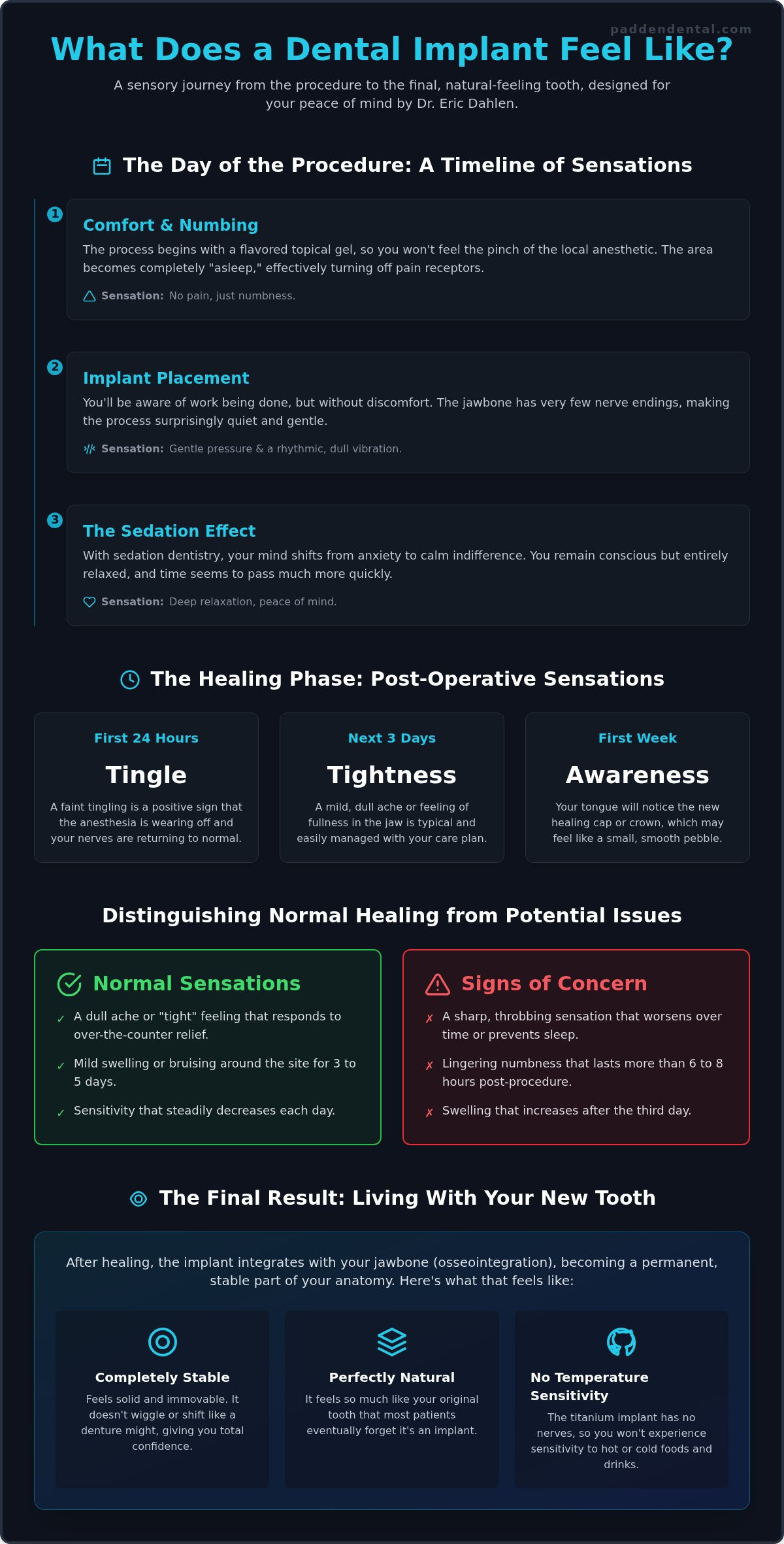
Your visit begins with a focus on total comfort and clarity. The first sensation you’ll notice is the application of a flavored topical gel, which prepares the area for a local anesthetic. Once the site is “asleep,” you won’t feel any sharp or pinching sensations. Many patients find that what does getting a dental implant feel like is mostly a series of gentle vibrations and steady pressure. Understanding a Dental implant placement helps clarify that while you are aware of the dentist working, your pain receptors are effectively offline.
During the actual placement of the post, the most common physical feeling is a rhythmic, dull vibration. It’s comparable to the sensation of someone pressing a thumb firmly against your jaw. You might hear the low hum of the instruments, but the experience is mechanical rather than painful. Because the jawbone has very few nerve endings, the process is often much quieter than people anticipate.
Sedation and Numbing: Eliminating the Pain Response
Dr. Eric Dahlen uses precise localized numbing to ensure the surgical site is completely “asleep,” removing the physical triggers of discomfort. For many, the emotional shift is the most significant part of the journey. Using sedation dentistry allows your mind to drift from high-alert anxiety to a state of calm indifference. In this relaxed state, time often seems to compress, making a forty-minute procedure feel like it passed in mere moments. Sedation dentistry in Vancouver allows patients to remain conscious but entirely relaxed. This approach ensures that what does getting a dental implant feel like is a manageable, quiet experience that prioritizes your peace of mind.
The Healing Phase: Navigating Post-Operative Sensations
Once you leave the clinic, the sensory experience shifts from pressure to a gradual awakening. During the first 24 hours, you will likely feel a faint tingle as the anesthesia wears off. This is a positive sign that your nerves are returning to their normal state. Many patients find that what does getting a dental implant feel like during the first week is simply a manageable period of adjustment. Over the next three days, it is typical to experience a sensation of tightness or a mild, dull ache in the jaw. Most patients describe this as a feeling of fullness rather than sharp distress, and it is easily managed with the care plan provided by Dr. Eric Dahlen.
Your tongue is incredibly sensitive to changes in your mouth, so you will notice the new healing cap or temporary crown immediately. It might feel like a small, smooth pebble against your cheek or tongue. Understanding what you can expect during these early days helps reduce the anxiety often associated with recovery. While mild swelling is normal, any sharp, radiating pain should be reported to your emergency dentist for immediate evaluation.
Distinguishing Normal Healing from Potential Issues
Healthy healing involves a steady decrease in sensitivity. You should feel better each day. While every journey is unique, you can generally distinguish normal sensations from concerns by looking for these signs:
- Normal: A dull ache or “tight” feeling that responds to over-the-counter relief.
- Concern: A sharp, throbbing sensation that prevents sleep or worsens over time.
- Normal: Mild swelling or bruising around the implant site for 3 to 5 days.
- Concern: Lingering numbness that lasts more than 6 to 8 hours after your procedure.
As the months pass, the sensation of the implant changes. The initial “tightness” fades into a feeling of stability as osseointegration occurs. This biological bond makes the implant feel like a permanent part of your anatomy. If you have questions about your specific recovery, our team at Padden Dental is always here to provide guidance and support.
The Final Result: How a Permanent Implant Feels to Live With
After the osseointegration process is complete, your implant becomes a permanent part of your anatomy. Unlike natural teeth, titanium posts don’t have nerves within the core, so you won’t experience sudden sensitivity to cold ice cream or hot coffee. It’s a unique, stable sensation where the tooth feels solid and immovable. While it’s helpful to understand the risks of dental implants as you would with any medical device, most patients find the long-term stability far outweighs the initial healing phase. The implant doesn’t wiggle or shift; it simply stays put.
For those transitioning from traditional dentures, the emotional relief is often the most significant change. You no longer have to worry about a prosthetic slipping during a lively conversation or a family meal. This restorative dentistry solution provides a level of security that mimics your original teeth. People often ask what does getting a dental implant feel like once it’s fully integrated. Dr. Eric Dahlen focuses on meticulous placement so that your bite feels perfectly balanced with your remaining teeth, making the restoration feel like a natural part of your smile.
Biting and Chewing: Restoring Natural Function
Your jaw adapts through a process called proprioception, which is how your brain perceives the pressure and position of your teeth. Because the porcelain crown is custom-crafted to match your natural enamel, it feels perfectly smooth to your tongue. The bite force is distributed directly into the jawbone, which helps maintain bone health over time. When you consider what does getting a dental implant feel like in the long run, the primary sensation is one of total reliability. Patients in Vancouver often forget which tooth is the implant after six months.
Your Journey to a Natural, Stable Smile
Understanding what does getting a dental implant feel like is the first step toward reclaiming your oral health and confidence. From the initial pressure-only procedure to the stable, natural sensation of a fully healed restoration, every stage is managed with your comfort in mind. Dr. Eric Dahlen has provided compassionate care in Vancouver since 2004, specializing in helping fearful patients feel at ease through every sensory transition. If you’ve been held back by anxiety, our expertise in sedation dentistry ensures a calm and predictable experience. You don’t have to live with the discomfort of missing teeth or the uncertainty of slipping dentures any longer. Please Schedule a Consultation with Dr. Eric Dahlen today. Our team is ready to help you achieve a permanent smile that looks and feels exactly like your own.
Frequently Asked Questions
Will I feel the drill during dental implant surgery?
You won’t feel any sharp pain or drilling sensations during the procedure because the surgical site is completely numbed with local anesthesia. Most patients report feeling only a steady pressure and a low, rhythmic vibration while the post is being set. Dr. Eric Dahlen uses sedation options to ensure that what does getting a dental implant feel like is a quiet, comfortable experience for every patient.
How painful is the recovery compared to a tooth extraction?
Most patients find the recovery from a dental implant is very similar to a simple tooth extraction. You might experience a dull ache or a sense of tightness for three to five days after the numbing wears off. This discomfort is typically manageable with over-the-counter relievers. Many people in Vancouver are surprised by how quickly they return to their normal routine after their restorative visit.
Does a dental implant feel like a real tooth when you eat?
A dental implant feels remarkably like a natural tooth once the porcelain crown is attached. Because it’s fused to your jawbone, it provides a stable bite force that allows you to chew your favorite foods without worry. You’ll notice a lack of sensitivity to hot and cold temperatures; this can actually make eating more comfortable than it was with a sensitive or damaged natural tooth.
Can you feel the metal post through your gums?
You cannot feel the titanium post through your gums once the area has healed. The implant is placed securely within the jawbone, and the gum tissue creates a healthy seal around the base of the restoration. When considering what does getting a dental implant feel like, remember that the only part you’ll interact with is the smooth crown, which feels just like natural tooth enamel to your tongue.