


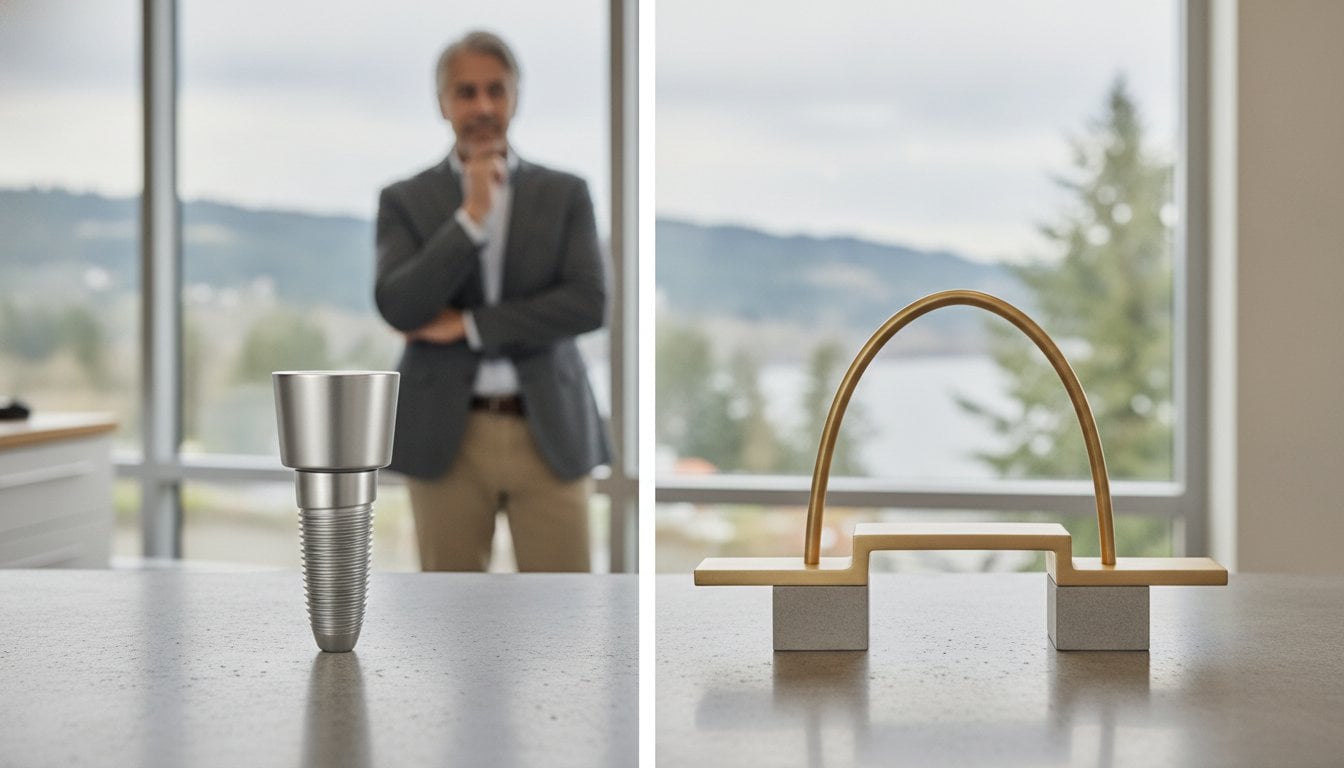
Choosing the quickest fix for a missing tooth might actually be the most demanding choice for your long-term health and your budget. It’s completely normal to feel a sense of hesitation or even a little anxiety when you’re deciding how to restore your smile. You want a solution that feels natural and lets you eat your favorite foods without a second thought. Whether you’re worried about the surgical process or simply want to know which option lasts the longest, understanding the trade-offs of a dental bridge vs implant is the first step toward a confident new chapter.
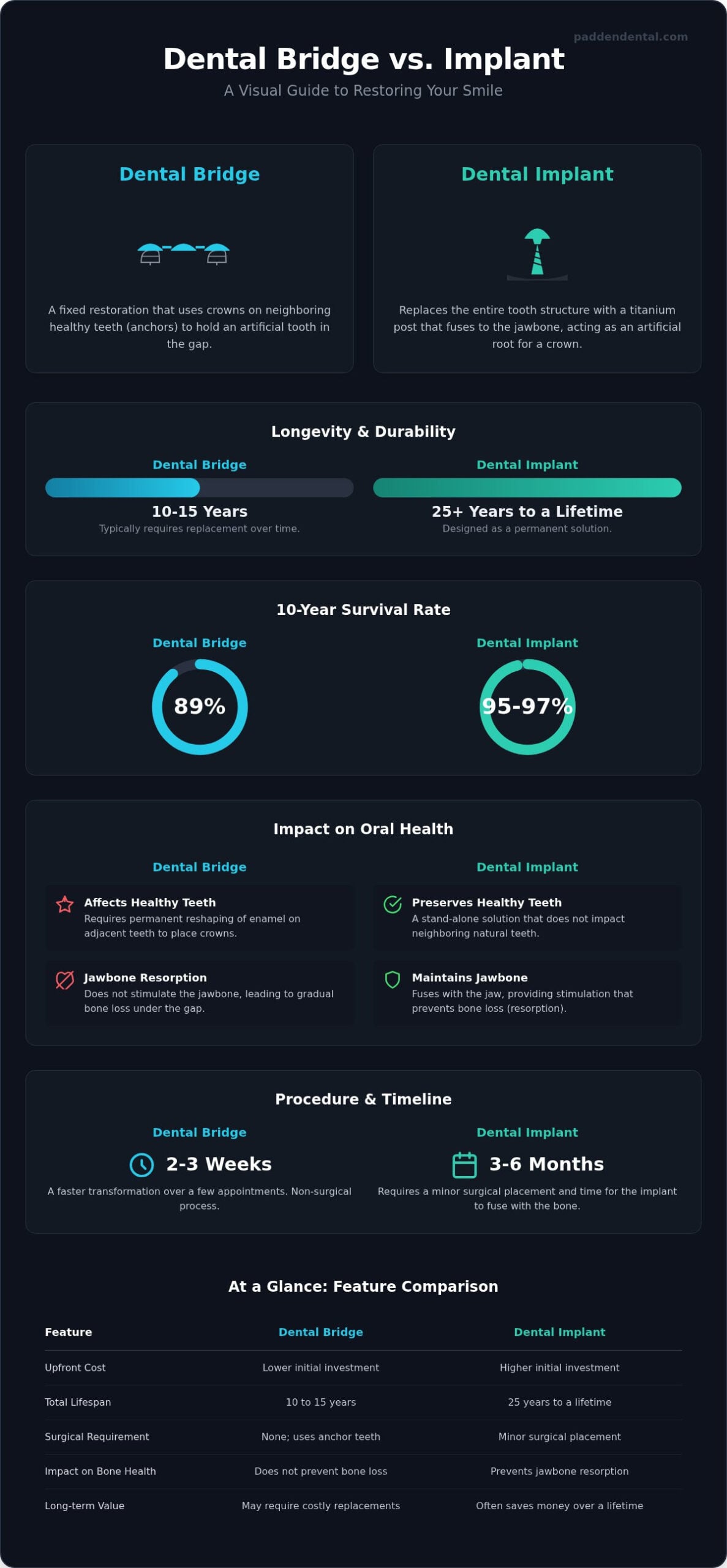
We believe that your comfort and the health of your remaining teeth should always come first. In this guide, we compare the pros, cons, and recovery timelines of both treatments to help you find the most reliable path forward. You’ll learn why dental implants have a 95 to 97 percent survival rate over ten years, compared to about 89 percent for bridges, and how they work to preserve your natural jawbone. We also explore how a patient-first approach and gentle sedation can turn a daunting decision into a simple, rewarding journey that protects your smile for a lifetime.
Key Takeaways
- Discover the core differences between a dental bridge that rests on neighboring teeth and a standalone implant that mimics a natural tooth root.
- Compare the long-term value of each option, including how implants can last over 25 years while bridges usually need updating every decade.
- Evaluate the timeline for your transformation, whether you prefer a faster result in a few weeks or a permanent foundation that takes a few months.
- Learn how the choice of a dental bridge vs implant affects your overall oral health, specifically regarding jawbone preservation and the protection of your healthy teeth.
- Explore how modern comfort techniques like sedation dentistry can ensure your path to a full smile is completely relaxed and worry-free.
Understanding the Choice: Dental Bridge vs. Implant Basics
Deciding how to replace a missing tooth is a significant step toward reclaiming your confidence and health. While both options offer beautiful results, they work in very different ways. A dental bridge is a fixed restoration that uses your existing teeth as anchors. We place crowns on the healthy teeth flanking the gap, which then hold a custom artificial tooth in place. It’s a reliable, time-tested method that has helped countless people smile again.
A dental implant takes a different approach by replacing the entire tooth structure from the root up. A small titanium post is placed into the jawbone, where it eventually fuses with your natural bone. This creates a rock-solid foundation for a custom crown. When you explore restorative dentistry in Vancouver WA, you’ll see that this method focuses on mimicking nature as closely as possible.
Missing teeth carry a hidden consequence that goes beyond aesthetics. Without a root to stimulate the area, the jawbone can begin to dissolve, a process called resorption. This often causes nearby teeth to tilt or drift into the empty space, which can change your bite and even your facial shape. Choosing between a dental bridge vs implant is about stopping this cycle and protecting your future wellness.
The Biological Cost: How Bridges Affect Healthy Teeth
One of the most important things to consider is how each treatment impacts your natural teeth. To place a traditional bridge, we must gently reshape the enamel on the neighboring healthy teeth. While this provides a secure fit, it means these teeth will always require crowns. Dental implants are stand-alone solutions. They don’t touch your other teeth, allowing you to keep your natural enamel intact. This independence is a significant advantage for patients who want to preserve as much of their original smile as possible.
Longevity and Durability
Your investment in your smile should stand the test of time. A dental bridge typically lasts between 5 and 15 years. Over time, the materials may wear down, or the anchoring teeth might need new care. Implants are built for a lifetime of use. Because the titanium post integrates with your bone, it becomes a permanent part of your anatomy. Success depends on simple, consistent care:
- Daily Care: Brush and floss just like you do with natural teeth.
- Professional Cleanings: Regular visits ensure the gums around your restoration stay healthy.
- Healthy Habits: Avoiding tobacco and maintaining a balanced diet helps your body support the restoration.
Both options require a commitment to hygiene, but the lifetime durability of an implant often makes it the gold standard for long-term satisfaction.
Comparing the Experience: Longevity, Cost, and Comfort
When you’re weighing the choice between a dental bridge vs implant, it’s helpful to look at the practical details of daily life. A bridge is a wonderful way to see a fast transformation. Usually, the process takes just two to three weeks. On the other hand, an implant is a journey that requires patience, often taking three to six months to fully integrate with your jawbone. This time allows your body to create a permanent bond that supports your new tooth for decades. Comparing dental bridges and implants shows that while the timelines differ, both lead to a beautiful, functional smile.
| Feature | Dental Bridge | Dental Implant |
|---|---|---|
| Upfront Cost | Lower initial investment | Higher initial investment |
| Total Lifespan | 10 to 15 years typically | 25 years to a lifetime |
| Surgical Requirement | None; uses anchor teeth | Minor surgical placement |
| Impact on Bone Health | Does not prevent bone loss | Prevents jawbone resorption |
Financial value is another major factor for many of our neighbors. While a bridge costs less today, it will likely need to be replaced at least once or twice over your lifetime. Because implants are designed to last 25 years or more, they often save you money and time in the long run. While a dental bridge is a reliable short-term fix, a dental implant is the only replacement that stimulates the jawbone like a natural tooth root. If you’re looking for a permanent solution, we can help you explore dental implants during a visit to our office.
Addressing Surgery Anxiety with Sedation
We know that the idea of “surgery” can feel overwhelming. In fact, fear of the procedure is the most common reason people choose a bridge over an implant. We want you to know that your peace of mind is our highest priority. Our team specializes in sedation dentistry in Vancouver, WA, which allows you to completely relax through the entire process. Many of our patients find they can even sleep through their appointment, waking up to a healthier smile without any stress or discomfort. At Padden Dental, your comfort is just as important as the clinical accuracy of your care.
Your Path to a Full Smile: Factors for Choosing and Next Steps
Finding the right path to a complete smile often depends on your specific health needs and your vision for the future. While we’ve explored the technical side of the dental bridge vs implant debate, the best choice is the one that makes you feel most at ease. It’s okay to feel overwhelmed by the details. We’re here to help you explore these options with clarity and neighborly care.
To help you narrow down your decision, consider which of these priorities resonates most with your current situation:
- Choose a Dental Bridge if: You need a faster result in just a few weeks; you have significant bone loss and prefer to avoid grafting; or the adjacent teeth already require crowns for other reasons.
- Choose a Dental Implant if: You want a permanent, lifetime solution; you want to protect the healthy enamel of neighboring teeth; or you desire a replacement that looks and functions exactly like a natural tooth.
Partnering with a skilled dental implant specialist in Vancouver WA ensures that your diagnostics are precise and your plan is tailored to your unique anatomy. We always encourage our neighbors to seek a second opinion if they feel unsure; for example, specialized clinics such as Nova Premier Dental offer expert insights into complex restorative cases. You deserve to feel 100 percent confident in your treatment plan before moving forward.
What to Expect During Your Consultation at Padden Dental
Your journey begins with a detailed look at your oral health. We use advanced 3D imaging to get a clear view of your jawbone density and the position of your existing teeth. This technology allows us to be meticulous in our planning. We then sit down together to create a custom plan that fits your lifestyle and your budget. It’s a collaborative process where your questions are always the priority.
Financing Your New Smile
We believe that high-quality care should be accessible to everyone in our community. Many restorative procedures have flexible payment options to help you manage the cost of your care over time. Whether you’re looking for a single replacement or a full makeover through cosmetic dentistry in Vancouver, we’re committed to helping you find a financial path that works. Your health is an investment that pays dividends in confidence and comfort for years to come.
Take the First Step Toward Your New Smile
Choosing between a dental bridge vs implant is a significant decision that shapes your oral health for years to come. Whether you prefer the rapid results of a bridge or the lifelong durability of a dental implant, the right choice is the one that brings you peace of mind. Your restoration isn’t just about appearance; it’s about protecting your jawbone and keeping your remaining teeth healthy and strong for the long term.
At Padden Dental, we’ve been a staple of the Vancouver community since 2004. Dr. Eric Padden and our dedicated team specialize in making restorative care a positive, gentle experience. If you’re nervous about the process, our specialized sedation options allow you to rest comfortably while we work. We pride ourselves on being a private practice where you’re treated like a neighbor, not just a patient on a chart.
We invite you to Schedule Your Restorative Consultation at Padden Dental Today. Let’s work together to find the solution that fits your life and restores your confidence. You’ve waited long enough to enjoy a full, healthy smile again, and we’re excited to help you get there.
Common Questions About Restoring Your Smile
Is a dental implant more painful than getting a bridge?
Most patients find that a dental implant procedure is surprisingly comfortable, with many reporting it feels similar to a simple tooth extraction. While a bridge is non-surgical and requires no healing time for the bone, modern local anesthetics and our gentle sedation options ensure you won’t feel pain during the implant placement. Any post-treatment soreness is typically managed with over-the-counter relief and fades within a few days. We prioritize your comfort at every step to ensure a stress-free experience.
How much more does a dental implant cost compared to a bridge in 2026?
An implant usually requires a larger upfront investment than a traditional bridge, but it provides significant long-term value. As of 2026, industry data shows that while a bridge is less expensive today, it typically needs replacement every 10 to 15 years. Because an implant can last 25 years or longer, the dental bridge vs implant comparison often reveals that the implant is actually the more affordable choice when you look at the total cost over your lifetime.
Can I replace a bridge with a dental implant later on?
Yes, it’s often possible to replace an old or failing bridge with a dental implant to achieve a more permanent result. If you’ve had a bridge for a long time, the jawbone underneath may have begun to thin since it hasn’t been stimulated by a root. We’ll use 3D imaging to check your bone density and see if a simple bone graft is needed to create a stable foundation for your new implant. Transitioning to an implant can help stop further bone loss and protect your neighboring teeth.
What happens if I don’t replace a missing tooth at all?
Leaving a gap in your smile can lead to shifting teeth, jawbone loss, and changes in your facial structure over time. When a tooth is missing, the surrounding teeth often tilt and drift into the empty space, which can lead to a misaligned bite and difficulty chewing. More importantly, the jawbone in that area will begin to dissolve without the stimulation of a tooth root. Taking action early with a bridge or implant helps preserve your natural smile and prevents more complex dental issues in the future.