



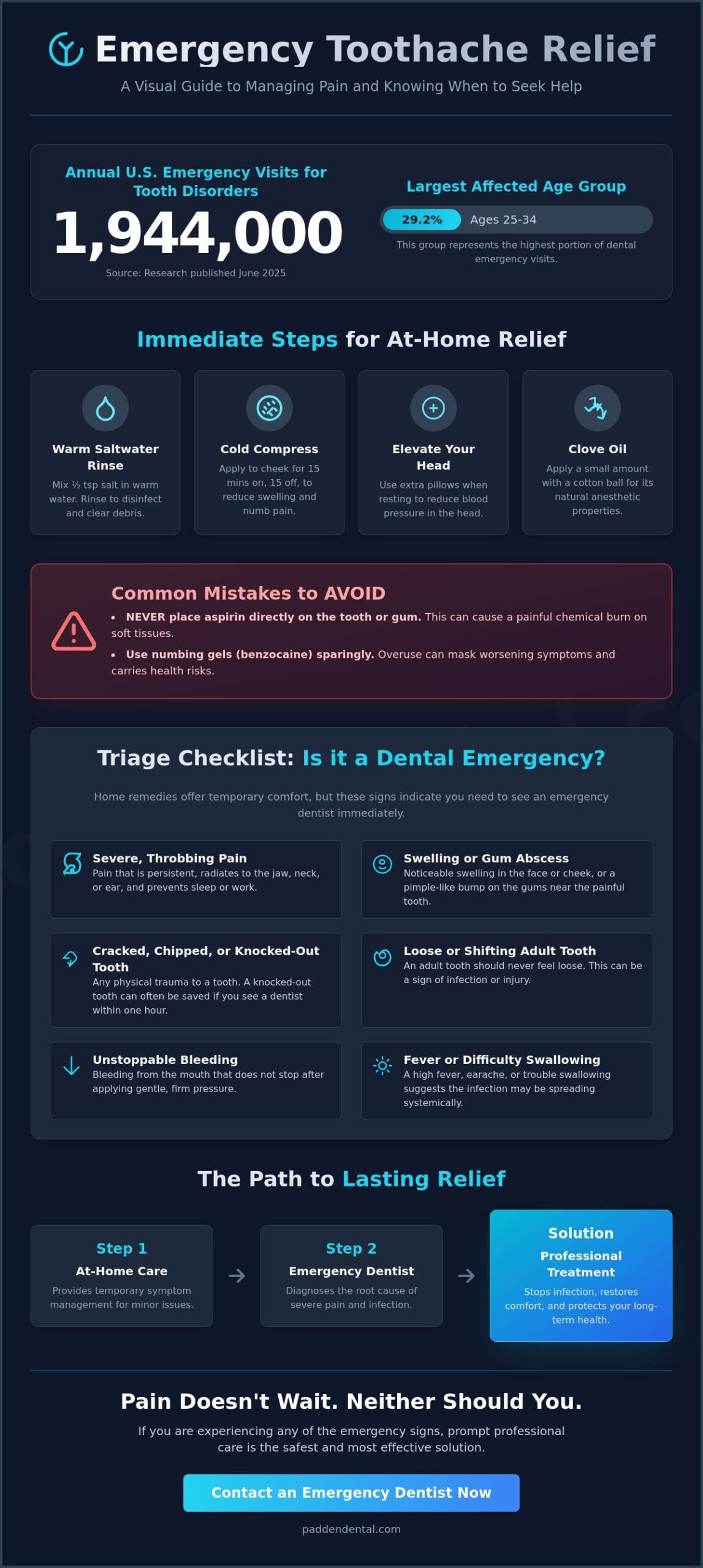
Did you know that an average of 1,944,000 emergency department visits occur every year in the U.S. specifically for tooth disorders? According to research published in June 2025, adults aged 25 to 34 make up the largest portion of these visits at 29.2%. When a tooth starts throbbing and prevents you from sleeping or focusing, finding emergency toothache relief becomes your only priority. We know how draining this experience is, especially when you’re feeling anxious about the next steps for your dental health.
You deserve a path to recovery that feels safe, clear, and supportive. We’re here to help you manage the discomfort at home while identifying the specific signs that require a visit to an emergency dentist. This guide provides practical steps to reduce your pain right now and clarifies when a professional clinic is a better choice than a hospital. You’ll gain the confidence to handle this dental challenge and get back to your daily life with a sense of ease.
Key Takeaways
- Learn simple, effective ways to manage discomfort at home, such as using warm saltwater and cold compresses to soothe the affected area.
- Discover how to differentiate between minor sensitivity and the need for professional emergency toothache relief by identifying specific throbbing pain patterns.
- Find out which physical signs, like gum abscesses, indicate a serious infection that requires immediate attention from an expert.
- Explore how professional clinical solutions can stop an infection from spreading to your jaw and restore your long-term comfort.
- Understand how choosing the right dental partner can transform a stressful dental emergency into a calm, organized path to recovery.
Immediate Steps for Emergency Toothache Relief at Home
When a sudden throb hits, your first instinct is to stop the pain immediately. Taking organized steps for emergency toothache relief can help you regain control and find comfort while you wait for a professional appointment. The goal is to manage the symptoms safely without causing further irritation to the sensitive nerves inside your mouth.
Start by mixing half a teaspoon of salt into a glass of warm water. This simple rinse acts as a gentle disinfectant. It helps clear away food debris trapped between teeth and reduces the bacterial load around the affected area. If you notice swelling, apply a cold compress to the outside of your cheek. Use a 15-minute on, 15-minute off cycle to constrict blood vessels and numb the area. This is a vital first step in understanding the causes of toothache and managing the inflammatory response effectively.
Your resting position also matters. When you lie flat, blood rushes to your head, which can increase the pressure on the tooth pulp and worsen the throbbing sensation. Try propping yourself up with extra pillows to keep your head elevated. This simple adjustment reduces blood pressure in the localized area and often makes it easier to rest or focus on other tasks.
Safe Natural Remedies vs. Over-the-Counter Options
Clove oil is a reliable natural remedy because it contains eugenol, a compound with natural anesthetic and antibacterial properties. You can dab a small amount on a cotton ball and apply it gently to the tooth for localized numbing. For systemic relief, ibuprofen is generally preferred over acetaminophen because it specifically targets the inflammation causing the pressure.
It’s vital to avoid certain common mistakes. Never place an aspirin tablet directly against your gum tissue. This doesn’t provide faster relief; instead, it can cause a painful chemical burn on the soft tissues of your mouth. Additionally, while topical numbing gels containing benzocaine are widely available, they should be used very sparingly, especially in children. These products can sometimes mask symptoms without addressing the underlying issue, and they carry specific health risks if overused.
When Tooth Pain Becomes a Dental Emergency
While home remedies offer temporary comfort, they don’t solve the root cause of your discomfort. Distinguishing between mild sensitivity and a true crisis is key to your long-term health. If your pain is a persistent, rhythmic throb that radiates to your jaw, neck, or ear, it likely indicates an infection within the tooth pulp. This type of deep pain rarely goes away on its own and often requires professional emergency toothache relief to resolve.
Take a moment to check your gums in a mirror. Look for small, pimple-like bumps, which are known as abscesses. These are clear signs of a localized infection that needs immediate attention to prevent it from spreading to the surrounding bone. Physical trauma is another clear indicator of an emergency. If you’ve experienced a cracked, chipped, or knocked-out tooth, time is your most valuable asset. A knocked-out tooth can often be saved if you reach a professional within the hour.
You should also monitor for signs that the issue is affecting your overall well-being. A high fever, persistent earache, or any difficulty swallowing suggests the infection might be moving beyond the tooth. In these specific cases, a visit to the emergency room is necessary to manage systemic risks before seeking professional dental solutions for the tooth itself.
Triage Checklist: Do You Need an Emergency Dentist?
Waiting even 24 hours can sometimes turn a manageable fix into a more complex procedure, such as an extraction. Use this quick checklist to see if you should call for an appointment right away:
- Severe swelling in the face, cheek, or gums.
- A loose or shifting adult tooth.
- Bleeding in the mouth that doesn’t stop after applying pressure.
- Excruciating pain that makes it impossible to sleep or work.
Living in our community means you have access to skilled care right when you need it most. Knowing where your emergency dentist is located before a crisis occurs helps lower your anxiety and speeds up your journey to recovery. If you’re currently facing any of these symptoms, reaching out to a emergency dentist in Vancouver, WA for same-day relief and anxiety-free care is the most reliable way to protect your smile and find lasting peace of mind.
Professional Solutions and Anxiety-Free Emergency Care
Once you’ve identified that your pain is more than a minor ache, the next step is moving toward a permanent solution. While salt rinses and cold compresses provide a temporary bridge, true emergency toothache relief only comes from addressing the source of the issue. A professional diagnosis is essential because it stops an infection from migrating into the jawbone or bloodstream. Clinical solutions such as root canals or emergency fillings are designed to preserve your natural tooth while removing the bacteria that cause excruciating throbbing. If you are experiencing a sharp, radiating throb that wakes you at night, learning about emergency tooth pain relief in Vancouver, WA and how a root canal can save your tooth may be the most important step you take toward recovery.
Following emergency toothache advice from the NHS and other leading health organizations ensures you don’t ignore symptoms that could lead to tooth loss. Padden Dental operates as a dedicated partner in your long-term wellness. We look beyond the immediate pain to identify how we can strengthen your smile through proactive restorative care. This approach helps prevent future crises and keeps your oral health on a steady, positive path. By choosing a comprehensive treatment plan, you’re investing in a future where sudden dental pain is a thing of the past.
Overcoming Dental Fear During an Emergency
It’s common to feel a sense of hesitation when facing a dental emergency. Many people delay calling an expert because they worry about the potential for more discomfort during treatment. We’ve built our Vancouver clinic to be a warm, patient-first environment that feels more like visiting a trusted family advisor than a cold medical facility. Our team prioritizes your peace of mind from the moment you walk through our doors, ensuring you feel cared for and understood.
To make your visit as stress-free as possible, we offer sedation dentistry. This tool allows you to rest comfortably while we work, effectively removing the barrier of dental anxiety. Modern technology has also transformed the way we provide care. Procedures that were once considered intimidating, such as root canals or oral surgery, are now remarkably efficient and virtually painless. We’re committed to delivering high standards of care that focus on your comfort and the successful, healthy outcome of your treatment journey.
Your Path to Lasting Dental Comfort
Managing a dental crisis starts with calm, intentional steps at home, but true peace of mind comes from knowing you have a professional partner ready to help. You now have the tools to soothe immediate discomfort and the clarity to recognize when a situation requires urgent attention. Since 2004, we’ve focused on providing expert restorative care that prioritizes both your health and your emotional well-being. Finding reliable emergency toothache relief should be a journey toward recovery, not a source of further stress.
Our convenient Vancouver location is specifically equipped to handle urgent needs in a warm, welcoming environment. If you’re feeling anxious about your visit, our compassionate sedation options ensure your experience remains relaxed and comfortable. You deserve to focus on your recovery while we handle the technical details of your care. Get Fast Relief-Contact Our Vancouver Emergency Team Now. We’re here to support you every step of the way as you return to your bright, healthy smile.
Frequently Asked Questions
Is a toothache considered a medical emergency?
A toothache becomes a medical emergency if it is accompanied by severe facial swelling that makes it difficult to breathe or swallow. While most dental issues are best handled in a specialized clinic, these systemic symptoms suggest an infection that requires immediate hospital intervention. For localized pain without these life threatening signs, a dental professional is your best resource for care.
What is the fastest way to stop a throbbing toothache?
The fastest temporary method to calm a throbbing tooth is taking an over the counter anti inflammatory medication like ibuprofen. This medication specifically targets the swelling inside the tooth pulp that causes intense pressure and pain. Combining this with a cold compress on your cheek provides emergency toothache relief by numbing the area and further reducing inflammation until you can see a professional.
Can I go to the ER for a toothache in Vancouver WA?
You can visit a local emergency room for dental pain, but they generally only provide temporary solutions like antibiotics or pain relief. Data shows the average cost of an ER visit for dental issues is $749, which is significantly higher than a visit to a specialized dental clinic. Since most hospitals don’t have dentists on staff, you’ll still need a follow up appointment to treat the actual cause of the pain.
How much does an emergency dental visit usually cost?
The total cost of an urgent visit depends on the specific diagnostics and treatments required to resolve your pain. An initial examination and X rays are typically the first step in determining the cause of your discomfort. Most dental insurance plans recognize the necessity of these visits and provide partial coverage, which often ranges from 50% to 80% depending on your specific policy and the procedure performed.