



With a success rate as high as 98 percent, dental implants are one of the most reliable ways to reclaim your smile and your confidence. Even with such positive odds, it’s natural to feel a bit of worry if you notice an unexpected sensation or a slight ache. You’ve made a meaningful investment in your health, and you deserve the peace of mind that comes with knowing your recovery is going exactly as planned. Learning to recognize the early signs of dental implant failure isn’t about looking for trouble; it’s about being a proactive partner in your own long-term wellness.
We understand that the thought of a complication can feel overwhelming, but most issues are easily manageable when they’re caught early. This guide will help you distinguish between normal healing and symptoms that might need a gentle check-up. You’ll discover the comfortable, anxiety-free steps available to protect your oral health and ensure your smile remains a source of pride. We’ll provide a clear path forward that focuses on your comfort, proving that a minor hurdle doesn’t have to stand in the way of your successful journey.
Key Takeaways
- Discover why being proactive is your best defense and how a success rate of over 95 percent means your smile is in safe hands.
- Learn to identify the subtle signs of dental implant failure, such as unexpected movement or persistent discomfort, so you can act quickly.
- Understand the common causes like peri-implantitis and how simple habits can protect your implants from unnecessary mechanical stress.
- Explore how advanced imaging and modern restorative techniques can often save an implant even if you’re experiencing complications.
- Gain peace of mind with a clear plan for maintaining your oral health through comfortable, anxiety-free care.
Recognizing the Warning Signs of Dental Implant Failure
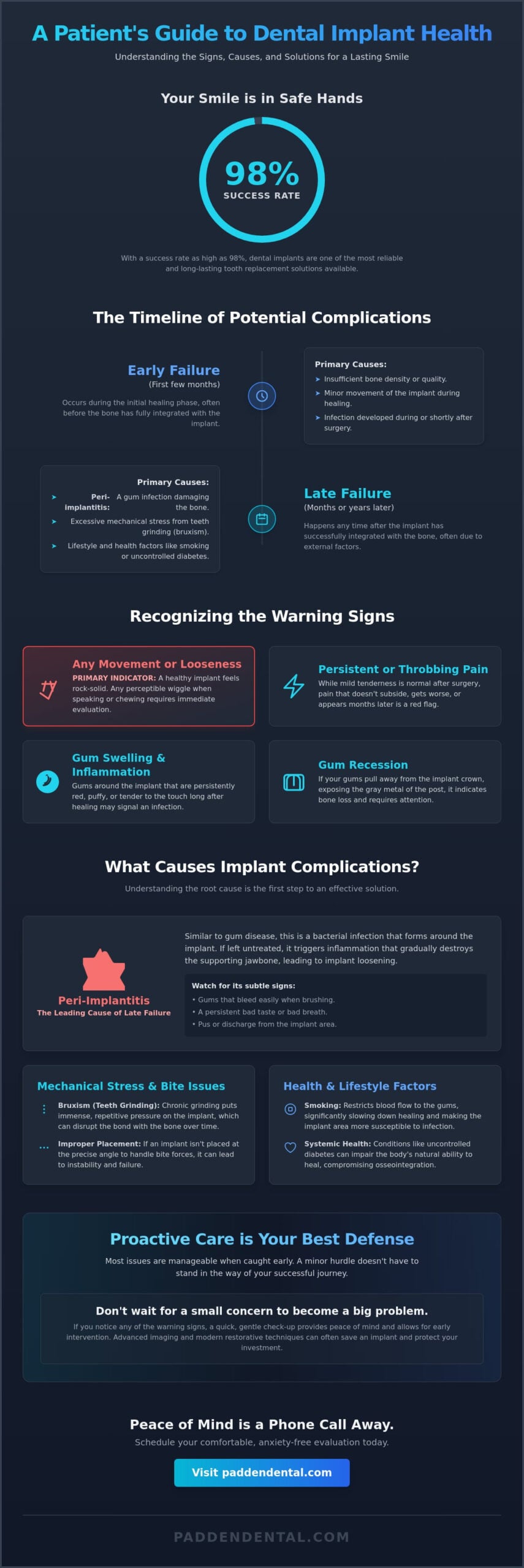
Dental implant failure refers to the inability of an implant to stay securely anchored or healthy within the jawbone. While this might sound concerning, it’s important to remember that dental implants boast an incredible success rate of 95 to 98 percent. Osseointegration is the critical process where the jawbone bonds to the titanium post to create a permanent foundation. By staying proactive and watching for the signs of dental implant failure, you can ensure your investment remains protected for years to come.
Distinguishing between typical post-surgical healing and a true complication is essential for your peace of mind. Some mild tenderness or swelling is expected in the days following your procedure. However, persistent, throbbing pain that doesn’t subside or pain that suddenly returns months later is a red flag. These sensations often indicate that the implant isn’t integrating correctly or that an underlying issue needs professional attention.
Early Failure vs. Late Failure: Understanding the Timeline
The timing of your symptoms offers valuable clues about what’s happening beneath the surface. Early failure typically occurs within the first few months; it’s usually caused by insufficient bone density or minor movement during the initial healing phase. Late failure happens much further down the road, sometimes years after a successful placement. Understanding the specific timeline of implant failure helps your Vancouver dentist diagnose the issue quickly, whether it’s related to a slow-moving infection or excessive mechanical pressure. Knowing when the sensation started allows us to create a precise, effective plan to save your smile.
Visual and Physical Symptoms to Watch For
A matured implant should feel exactly like a natural tooth; it should be rock-solid and completely stationary. If you notice even a tiny bit of movement or a “loose” sensation when you speak or chew, it’s the primary indicator that the bond between the post and bone is compromised. These signs of dental implant failure often require immediate professional evaluation to prevent further bone loss.
Other visual cues include gum recession, where the metal of the implant post becomes visible through the gum line, or persistent swelling that looks red and inflamed. If your gums seem to be pulling away or the area feels tender long after the healing phase, a quick check-up can often resolve the issue before it progresses. We focus on catching these changes early so your restorative journey remains comfortable and successful.
Common Causes: Why Do Dental Implants Fail?
Understanding the underlying reasons for complications allows you to take proactive steps to protect your smile. While the vast majority of procedures are successful, certain factors can disrupt the healing process or compromise the stability of the post over time. Identifying these triggers early is one of the most effective ways to manage the signs of dental implant failure and keep your restoration on track.
Peri-implantitis stands as a leading cause of late-stage complications. This is a specialized gum infection that develops around the implant, behaving much like traditional periodontal disease does with natural teeth. Beyond infection, mechanical stress plays a significant role. If you struggle with bruxism, or chronic teeth grinding, the constant pressure can eventually loosen the connection between the implant and your jawbone. This stress can be particularly taxing if the implant wasn’t placed with the precise angulation required for your specific bite.
Your overall health also influences the long-term success of your procedure. Conditions like uncontrolled diabetes can slow down the body’s natural ability to heal, while smoking restricts the essential blood flow your gums need to recover and thrive. Choosing a skilled restorative dentistry specialist ensures that every detail, from bone density to placement, is handled with meticulous care. If you’re ever unsure about a new sensation, reaching out to our team for a gentle dental implant evaluation can provide the clarity you need.
The Impact of Peri-Implantitis
When bacteria accumulate beneath the gumline around the titanium post, they can trigger inflammation that gradually wears away the supporting bone. This process often presents with subtle warning signs like a persistent bad taste in your mouth, lingering bad breath, or gums that bleed during your daily cleaning routine. Catching this infection early allows for a thorough, professional cleaning that can stop bone loss and save the hardware.
Lifestyle Factors and Bone Health
A successful bond depends heavily on the density of your jawbone. If the bone is naturally thin or has receded over time, we may suggest bone grafting to create a more robust foundation for your new tooth. It’s also vital to consider the impact of smoking; it significantly increases the risk of early failure by limiting the oxygen and nutrients your tissues need to bond with the post. Prioritizing your systemic health is a beautiful way to ensure your dental journey is a smooth and rewarding one.
How We Save Your Smile: Anxiety-Free Restorative Solutions
If you’ve noticed signs of dental implant failure, it’s natural to feel a sense of worry about your investment. The good news is that a complication doesn’t always mean your implant is lost. When we identify these issues early, we can often implement a plan to stabilize the area and protect your oral health. Our diagnostic process uses advanced imaging to check bone levels and stability, giving us a clear, detailed picture of how to best support your smile and get your recovery back on track.
Even if an implant eventually needs removal, the replacement process is handled with the same meticulous care as your original procedure. We focus on creating a stable foundation, often through bone grafting, to ensure your next implant is even more successful. This methodical approach ensures your second chance at a perfect smile is a permanent one, allowing you to move forward with complete confidence in your dental health.
The Padden Dental Approach to Implant Repair
We prioritize your comfort above all else. By utilizing sedation dentistry, we ensure you remain completely relaxed while we address the root cause of the issue. Whether you need a gentle deep cleaning to resolve an infection or a minor adjustment to your bite, the experience is designed to be entirely stress-free. For those experiencing sudden movement or sharp pain, our emergency dental care provides the prompt relief and professional attention you need to reclaim your peace of mind.
Preventing Future Failure
Maintaining your beautiful results is a journey we take together. Choosing an experienced dental implant clinic in Vancouver is your first and best defense against future complications. To keep your smile healthy and your investment secure, consider these proactive steps:
- Schedule routine hygiene visits and specialized cleanings designed specifically for implants.
- Wear a custom nightguard to protect your hardware from the heavy forces of teeth grinding.
- Maintain a consistent home care routine to keep the gumline healthy and free of bacteria.
By focusing on these simple habits and partnering with a team that values your comfort, you can enjoy the many benefits of your dental implants for a lifetime.
Protect Your Smile and Your Peace of Mind
Your dental journey is an investment in both your long-term health and your daily confidence. While complications are rare, staying mindful of the signs of dental implant failure empowers you to protect that investment with ease. Most issues are highly treatable when they’re identified early, and modern restorative techniques are specifically designed to preserve your bone health and your hardware without any unnecessary stress.
At Padden Dental, we bring over 20 years of local expertise in Vancouver to every individual we serve. Dr. Eric Dahlen and our dedicated team specialize in a restorative focus that prioritizes your comfort and long-term success. We believe that professional care should feel like a partnership, which is why we offer advanced sedation options to ensure any corrective steps are completely relaxed and anxiety-free. You deserve a smile that feels as natural as it looks, and we’re here to provide the steady, meticulous care to keep it that way.
Ready to ensure your oral health is on the right track? Schedule your implant consultation with Padden Dental today. We’re honored to be your trusted partner in maintaining a healthy, vibrant smile for a lifetime.
Frequently Asked Questions
Is it normal for a dental implant to wiggle slightly?
No, a matured dental implant should never wiggle or feel loose in your mouth. Unlike natural teeth, which are held in place by a flexible ligament, implants are designed to fuse directly to your jawbone for a rock-solid foundation. Any movement is a primary indicator that the bond between the post and the bone hasn’t formed correctly or has been compromised. If you notice a shift, it’s important to have it evaluated to see if the issue is with the crown or the implant itself.
Can a failing dental implant be saved without surgery?
It’s absolutely possible to save a failing implant without invasive surgery if the problem is addressed in its earliest stages. If the issue is a minor infection, a specialized deep cleaning or a course of targeted antibiotics can often restore health to the surrounding tissue. Catching the signs of dental implant failure early allows us to use these conservative, comfortable methods to protect your smile and avoid more complex procedures later on.
What does dental implant infection feel like?
A dental implant infection, known as peri-implantitis, typically feels like a persistent, dull tenderness rather than a sharp, sudden pain. You might notice a lingering bad taste in your mouth or breath that doesn’t improve even after careful brushing. Visually, the gums around the post may look red and swollen, or they might bleed when you clean the area. These symptoms suggest that bacteria have reached the deeper tissues and require a professional touch to resolve.
How much pain is normal after dental implant surgery in 2026?
Most patients experience only mild to moderate discomfort that typically subsides within three to five days after the procedure. Modern advancements in restorative care and sedation make the recovery process very manageable and predictable for most people. If you find that your pain is increasing after the first week or if you experience throbbing that prevents sleep, these could be signs of dental implant failure. We always encourage a quick, reassuring check-up if your recovery doesn’t feel steady and comfortable.