



What if your recovery from dental implants felt less like a restriction and more like a nourishing reset for your body? Many patients worry that a soft food diet means weeks of bland broths or the constant fear of accidentally dislodging a healing blood clot. It’s natural to feel anxious about maintaining your strength when your favorites are off the menu. Dr. Eric Dahlen and our team believe your path to a healthy smile should be as comfortable as the treatment itself.
Knowing exactly what to eat after oral surgery is the secret to a faster recovery. We’ve created this 2026 guide to provide a delicious, nutrient-dense roadmap that accelerates tissue repair. You’ll discover a clear timeline of safe textures and high-protein options that boost your healing. From the first 24 hours to your transition back to solids, we’ll help you feel confident and satisfied.
Key Takeaways
- Master the “cold-to-lukewarm” temperature rule to protect your surgical site and stabilize blood clots during the first 24 hours.
- Discover exactly what to eat after oral surgery to fuel your recovery with protein-rich, fork-tender healing superfoods starting on day two.
- Identify the specific crunchy and acidic foods on the “No-Fly List” that can irritate sensitive tissues or lead to unwanted infections.
- Learn why avoiding straws is a non-negotiable step in preventing the painful suction-related complication known as dry socket.
The First 24 Hours: Prioritizing Hydration and Gentle Liquid Nutrition
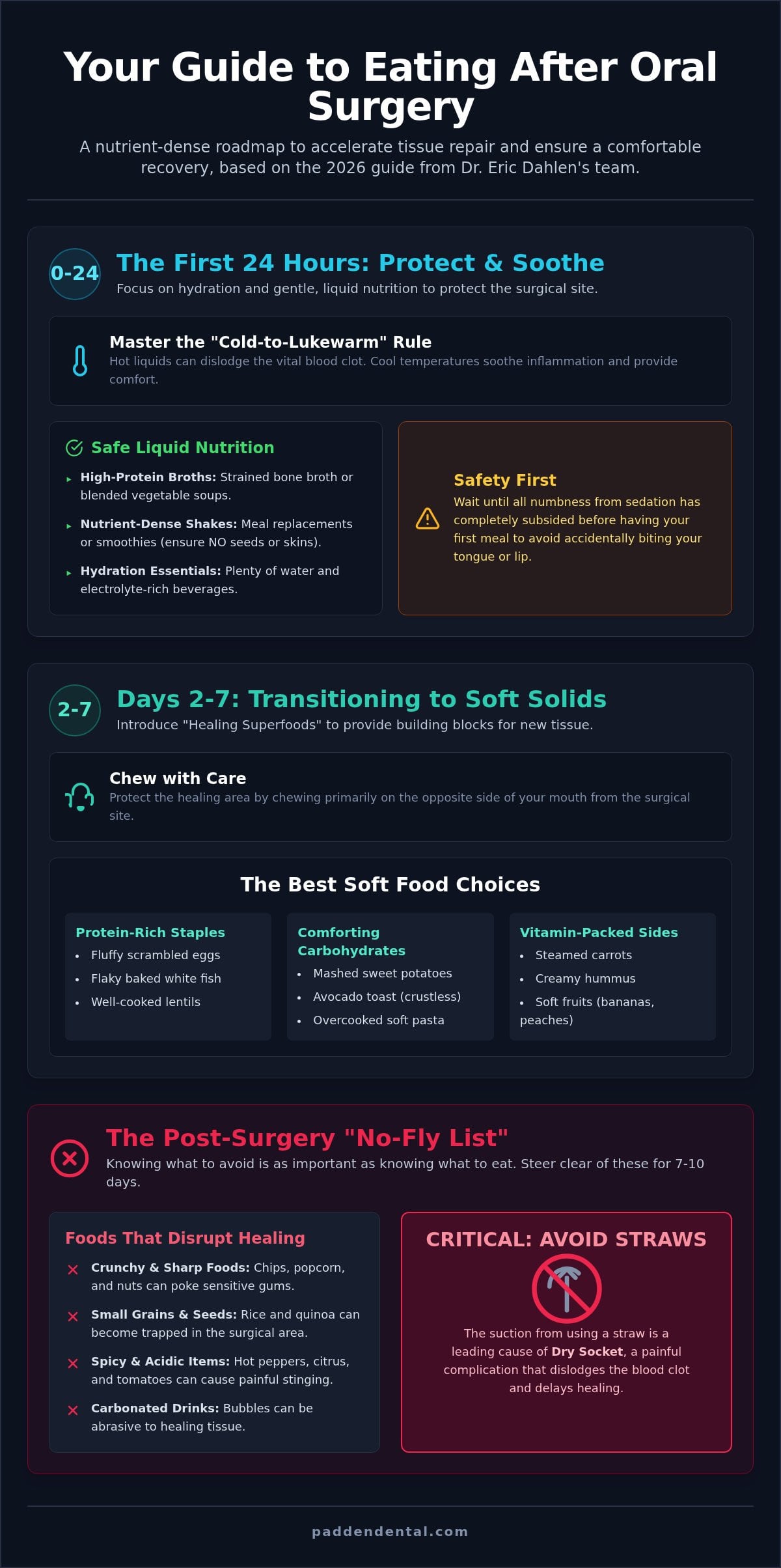
The first 24 hours following your procedure are the most critical for a smooth recovery. During this window, your primary goal is to protect the surgical site while your body begins the vital task of forming a blood clot. To ensure this “natural bandage” stays in place, you should focus exclusively on a liquid or ultra-soft approach. Understanding what to eat after oral surgery during this initial phase helps you avoid irritation and promotes faster tissue repair.
If you’ve opted for sedation dentistry in Vancouver, WA, your first priority is safety. Wait until all numbness has subsided before your first meal. This prevents you from accidentally biting your lip or tongue while the area is still desensitized. Stick to the “cold-to-lukewarm” rule during this time. Hot liquids can increase blood flow to the site and potentially dislodge the clot; conversely, cool temperatures help soothe inflammation and provide much-needed comfort.
Safe Liquid Options for Immediate Recovery
Transitioning to a soft diet starts with high-quality liquids that provide the energy you need without the risk of chewing. When planning what to eat after oral surgery, prioritize items that require zero jaw movement. Focus on these nourishing choices:
- High-protein broths: Sip on strained bone broth or blended vegetable soups to keep your strength up. Ensure they are poured through a fine mesh strainer to remove any lingering chunks.
- Nutrient-dense shakes: Choose smooth meal replacement shakes or Greek yogurt-based smoothies. Always double-check that they are free of small seeds or fruit skins that could get trapped in the surgical site.
- Hydration essentials: Drink plenty of water and electrolyte-rich beverages. Staying hydrated is essential for flushing away debris and supporting cellular repair. Avoid carbonated drinks, as the bubbles can be abrasive to healing tissue.
Days 2 Through 7: Transitioning to Soft Solids and Healing Superfoods
Once the initial 24 hours pass, you can start exploring a wider variety of textures. You’ll know you’re ready to move beyond liquids when the initial swelling begins to subside and you can comfortably open your mouth. Understanding what to eat after oral surgery during this middle phase is a vital part of your journey with restorative dentistry. Choosing specific “Healing Superfoods” helps repair tissue and maintain your energy levels. While you expand your menu, keep chewing focused on the opposite side of your surgical site to protect the healing area.
The Best Soft Food Choices for Your Healing Week
A balanced recovery diet requires more than just calories. When deciding what to eat after oral surgery, it’s best to focus on a thoughtful mix of vitamins, healthy fats, and proteins. Many experts suggest foods to eat after wisdom teeth removal that are naturally soft and easy to digest. Focus on these categories to stay satisfied:
- Protein-rich staples: Fluffy scrambled eggs, flaky baked white fish, and well-cooked legumes like lentils provide the building blocks for new tissue.
- Comforting carbohydrates: Mashed sweet potatoes, avocado toast on crustless bread, and overcooked pasta are gentle on your jaw while providing lasting energy.
- Vitamin-packed sides: Steamed carrots, creamy hummus, and soft-ripened fruits like bananas or peaches offer essential nutrients without the need for intense chewing.
If you have questions about your specific recovery timeline, the team at Padden Dental is always here to guide you through every step. Dr. Eric Dahlen ensures each patient has a clear, personalized plan for a successful outcome.
The Post-Surgery “No-Fly List” and Essential Safety Tips
While focusing on what to eat after oral surgery is vital, knowing what to avoid is equally important for your safety. Certain foods can cause physical irritation, increase the risk of infection, or even physically dislodge your surgical sutures. We recommend staying clear of the “No-Fly List” for at least the first seven to ten days of your recovery journey. This helps ensure your dental implants or restorative work stays protected during the most vulnerable phase.
Avoid these specific items to keep your healing on track:
- Crunchy and sharp foods: Chips, popcorn, and nuts can poke sensitive gums and disrupt the site.
- Small grains: Rice, quinoa, and seeds can easily become trapped in the surgical area, leading to irritation.
- Spicy and acidic items: Hot peppers, citrus fruits, and tomatoes can cause painful stinging and inflammation.
The most critical rule is the absolute ban on using straws. When you use a straw, the negative pressure created by suction can pull the healing blood clot right out of its socket. Dry socket is the loss of a protective blood clot caused by suction or irritation. This condition is notoriously painful and can significantly delay your progress. Stick to sipping directly from a cup or using a spoon for your smoothies instead.
Preventing Complications Through Smart Eating Habits
Keeping your mouth clean after meals is essential, but it must be done gently. Rather than vigorous swishing, let a warm salt water rinse roll across the area and fall out of your mouth into the sink. Avoid alcohol and tobacco during this week; these substances restrict blood flow and are the biggest threats to your new dental implants. If you experience unexpected throbbing or discomfort that doesn’t improve with rest, don’t hesitate to reach out to an emergency dentist in Vancouver, WA for professional guidance.
Ready for a Smooth and Nourishing Recovery?
Your journey to a renewed smile is a partnership between expert clinical care and mindful recovery at home. By following a phased approach and knowing exactly what to eat after oral surgery, you can protect your investment and speed up the healing process. Remember to prioritize cool liquids in the first 24 hours, transition to protein-rich soft solids like flaky fish, and strictly avoid straws to prevent dry socket.
Dr. Eric Dahlen has served the Vancouver community since 2004, offering expert sedation options to ensure your procedure and recovery are as comfortable as possible. Our team is dedicated to your long-term health and satisfaction. Schedule your restorative consultation at Padden Dental today to take the next step in your dental health journey. We look forward to supporting your bright, healthy future.
Frequently Asked Questions
How long do I have to wait to eat after my oral surgery?
You should wait until the numbness from your anesthesia has completely worn off before attempting to eat. This typically takes two to three hours after your appointment. Eating while your mouth is still desensitized can lead to accidental biting of your tongue or cheeks. Once the sensation returns, you can safely begin your liquid-only phase.
Can I drink through a straw after getting my wisdom teeth out?
You must avoid using straws for at least seven days following your procedure. The suction force created by a straw is strong enough to pull the healing blood clot out of the extraction site. This leads to a painful condition called dry socket. It’s best to sip your beverages directly from a cup or use a spoon for thicker smoothies.
What are the best high-protein foods that don’t require chewing?
Greek yogurt, smooth protein shakes, and silken tofu are fantastic choices when planning what to eat after oral surgery. For a savory option, try strained bone broth or blended bean soups that provide the building blocks for tissue repair. These nutrient-dense foods keep your energy levels high while ensuring your surgical site remains undisturbed during the initial healing phase.
Is it okay to eat ice cream or cold foods after surgery?
Cold foods are actually encouraged during the first 24 hours because they help soothe inflammation and reduce swelling. Enjoying plain ice cream, chilled applesauce, or a cold fruit puree can provide significant comfort. Just be careful to choose smooth varieties without any crunchy inclusions like nuts, seeds, or candy bits that could poke or irritate the sensitive area.