



Did you know that you can lose up to 25% of your jawbone width in just the first year after losing a tooth? It’s a startling figure, but it highlights why choosing the right restoration is about so much more than just filling a gap. When you’re weighing a dental bridge vs implant for missing teeth, you’re really deciding on the future of your oral health and how you’ll feel every time you laugh or sit down for a meal. It’s completely natural to feel a bit overwhelmed by the choices, especially when you’re balancing concerns about comfort, surgery, and long-term value.
We understand that you want a functional bite and a smile that feels like it has always been yours. You deserve a treatment process that is as stress-free as the final result. In this guide, we’ll break down the pros and cons of each option for 2026, comparing everything from their lifespans to how they protect your surrounding teeth. We will look at the long-term impact on your health and your confidence to help you find the perfect fit. By the end, you’ll have the clarity you need to choose a path that brings back your joy and ensures your smile lasts a lifetime.
Key Takeaways
- Understand how a bridge relies on neighboring teeth while an implant stands on its own to protect your natural jawbone.
- Learn how the choice of a dental bridge vs implant for missing teeth affects your long-term health and why implants are often considered a lifetime investment.
- Discover the daily differences in care, from simple brushing for implants to using specialized tools for bridge maintenance.
- Find out how modern sedation dentistry ensures your journey to a restored smile is relaxed and completely stress-free.
- Identify the specific health factors like bone density that determine which solution will give you the most reliable and beautiful results.
Understanding the Mechanics: Dental Bridge vs. Implant for Missing Teeth
Choosing the right way to restore your smile is a significant step in your health journey. When you compare a dental bridge vs implant for missing teeth, the main difference is how each solution interacts with your mouth’s anatomy. A dental bridge uses your existing teeth for support, while an implant functions as a completely independent structure. Both options offer a beautiful, functional result, but they achieve that goal through very different mechanical approaches. Choosing between a dental bridge vs implant for missing teeth often comes down to your personal goals for longevity, and whether you are consulting a local clinic or researching the work of specialists in complex implantology such as samintharajkumar.com.sg, understanding these mechanics is the first step.
How a Dental Bridge Works
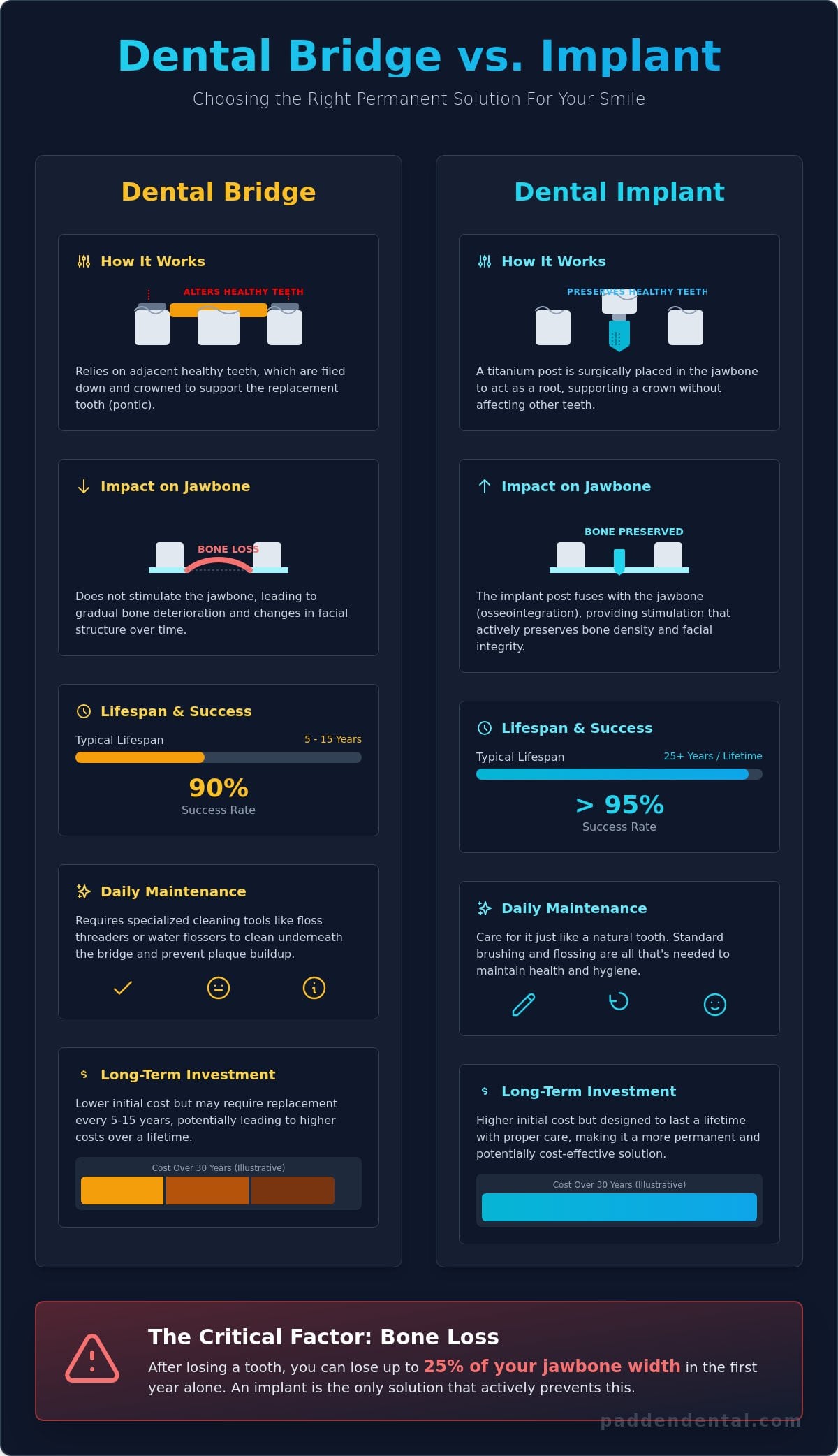
A bridge is a non-surgical option that relies on the strength of your neighboring teeth. To hold the replacement tooth in place, we prepare the two teeth adjacent to the gap by removing a small amount of enamel. These teeth, known as abutments, are fitted with crowns that serve as pillars. The prosthetic tooth, or pontic, is fused between these crowns. It’s a remarkably quick process. You can often walk away with a fully restored smile in just two appointments. However, keep in mind that this method requires altering the structure of healthy teeth to provide the necessary support.
The Anatomy of a Dental Implant
A Dental implant is designed to mimic the natural relationship between a tooth and the jawbone. It’s a sophisticated three-part system. First, a biocompatible titanium post is placed into the jaw to act as a root. Next, a connector called an abutment is attached. Finally, a custom porcelain crown is placed on top to complete your smile. The true benefit lies in osseointegration. This is the biological process where your jawbone heals around the post, locking it firmly into place. Because it stands alone, an implant provides independent support. It doesn’t require any changes to your adjacent teeth, making it a conservative choice for long-term oral health.
Dental Bridge vs. Implant: A Comparison of Longevity and Value
Thinking about the future of your smile means looking beyond the next few months. When deciding on a dental bridge vs implant for missing teeth, longevity and daily ease are usually the top priorities for our patients in Vancouver. While both options can restore your ability to eat and speak with confidence, they offer different levels of stability over the decades. Modern dental implants have a success rate of over 95%, while bridges maintain a strong 90% success rate. Choosing the right path involves weighing how much time you want to spend on maintenance versus the peace of mind that comes with a permanent solution.
The Bone Loss Factor
The health of your jawbone is a hidden but vital part of your facial structure. When a tooth is lost, the bone that once held the root begins to shrink because it no longer receives stimulation from chewing. Research shows that up to 25% of bone width can be lost within the first year alone. Because an implant mimics a natural root, it’s the only restorative choice that actively preserves your jawbone and prevents changes to your facial shape. You can read more about these structural differences in this Dental Bridge vs Implant comparison by the Cleveland Clinic.
Cost vs. Long-Term Investment
It’s helpful to view your treatment as a long-term investment in your well-being. A dental bridge often has a lower upfront cost, which makes it an attractive starting point. However, bridges typically last between 5 and 15 years before they need replacement. In contrast, an implant is designed to last 25 years or even a lifetime with excellent care. Over a 30-year period, the cost of replacing a bridge multiple times can actually exceed the one-time investment of an implant. Maintenance also plays a role in your daily satisfaction. Consider these daily care differences:
- Dental Implants: You brush and floss them just like your natural teeth. There’s no learning curve or extra equipment needed.
- Dental Bridges: These require a bit more attention, often needing special threading tools or water flossers to clean underneath the prosthetic tooth.
If you’re curious about which option fits your lifestyle best, our team is always here to help you explore your smile restoration options during a comfortable visit.
Choosing Your Best Path to a Restored Smile in Vancouver
Every smile is unique, and deciding between a dental bridge vs implant for missing teeth isn’t just about the mechanics; it’s about your lifestyle and comfort. The journey to a complete smile always begins with a comprehensive restorative dentistry consultation. During this visit, we look closely at your gum health and bone density. These factors are the foundation of a successful restoration. We’ll listen to your concerns and help you visualize the final result so you can feel confident in your choice.
When a Bridge Might Be the Better Option
Bridges remain a wonderful choice for many of our neighbors. If you’ve experienced significant bone loss and prefer to avoid bone grafting procedures, a bridge provides a stable and beautiful result without the need for surgery. It’s also the fastest path to a complete smile. If you are looking for a quick aesthetic fix for a front tooth before a wedding or a big career move, a bridge can often be completed in just a few weeks. It offers a reliable way to reclaim your smile’s appearance and function in a short amount of time.
The Padden Dental Advantage: Comfort and Precision
We know that the thought of dental surgery can feel intimidating. Many people worry about the “fear factor” of getting an implant, but we’ve designed our practice to replace that anxiety with peace of mind. We use advanced imaging technology to plan every step of the process with incredible precision before we even begin. This level of detail ensures a smoother experience and a more predictable outcome for your new smile.
For those who feel nervous about the process, sedation dentistry is a wonderful tool. It turns what might feel like a scary appointment into a relaxing, nap-like experience. You can drift through your visit and wake up with the hard part already behind you. Dr. Eric Dahlen tailors every treatment plan to the individual, ensuring your care is as unique as your smile. We’re here to help you weigh the dental bridge vs implant for missing teeth debate with honesty and warmth, guiding you toward the solution that fits your life best.
Your Journey to a Complete Smile Starts Here
Restoring your smile is a personal journey that impacts your health, your appearance, and your daily joy. Whether you prioritize the rapid results of a bridge or the lifelong durability of an implant, the right choice depends on your unique goals. Deciding between a dental bridge vs implant for missing teeth doesn’t have to be a stressful experience. You deserve a solution that feels natural and lasts for years to come. By understanding how each option works, you can move forward with total clarity and confidence.
At our specialized dental implant clinic, we’ve helped our Vancouver neighbors find their perfect smiles for over 20 years. Dr. Eric Dahlen and our team focus on your comfort above all else, offering gentle sedation options to ensure your visit is completely relaxing. We’re here to be your trusted partners in health. Schedule your restorative consultation with Dr. Padden today and take the first step toward a functional, beautiful bite. We’re looking forward to helping you smile with pride again.
Frequently Asked Questions
Is a dental implant more painful than getting a bridge?
Most patients find that receiving an implant is no more uncomfortable than a standard tooth extraction or a filling. While a bridge is non-surgical, it does require the reshaping of healthy neighboring teeth, which can sometimes cause temporary sensitivity. We prioritize your peace of mind by using local numbing and advanced sedation options to ensure your visit is completely relaxed and pain-free.
How long does the dental implant process take compared to a bridge?
A dental bridge is usually completed in just two appointments over about two or three weeks. The process for an implant takes longer, typically spanning three to six months. This extra time is necessary for your jawbone to heal and bond with the implant post. While the bridge offers a faster result, the implant provides a permanent foundation that can last a lifetime.
Will my insurance cover a dental bridge or an implant?
Many insurance plans in 2026 provide coverage for bridges, and an increasing number of providers now include benefits for implants. Every policy has different limits and requirements for a dental bridge vs implant for missing teeth. Our team is always happy to help you review your specific plan and explain your benefits so you can make an informed decision for your health.
Can I switch from a dental bridge to an implant later on?
Yes, it’s possible to replace an old bridge with a dental implant later in life. It’s helpful to keep in mind that since bridges don’t stimulate the jawbone, the bone in that area may thin over time. If you decide to make the switch after many years, we’ll simply evaluate your bone density to see if a graft is needed to provide a sturdy base for your new implant.